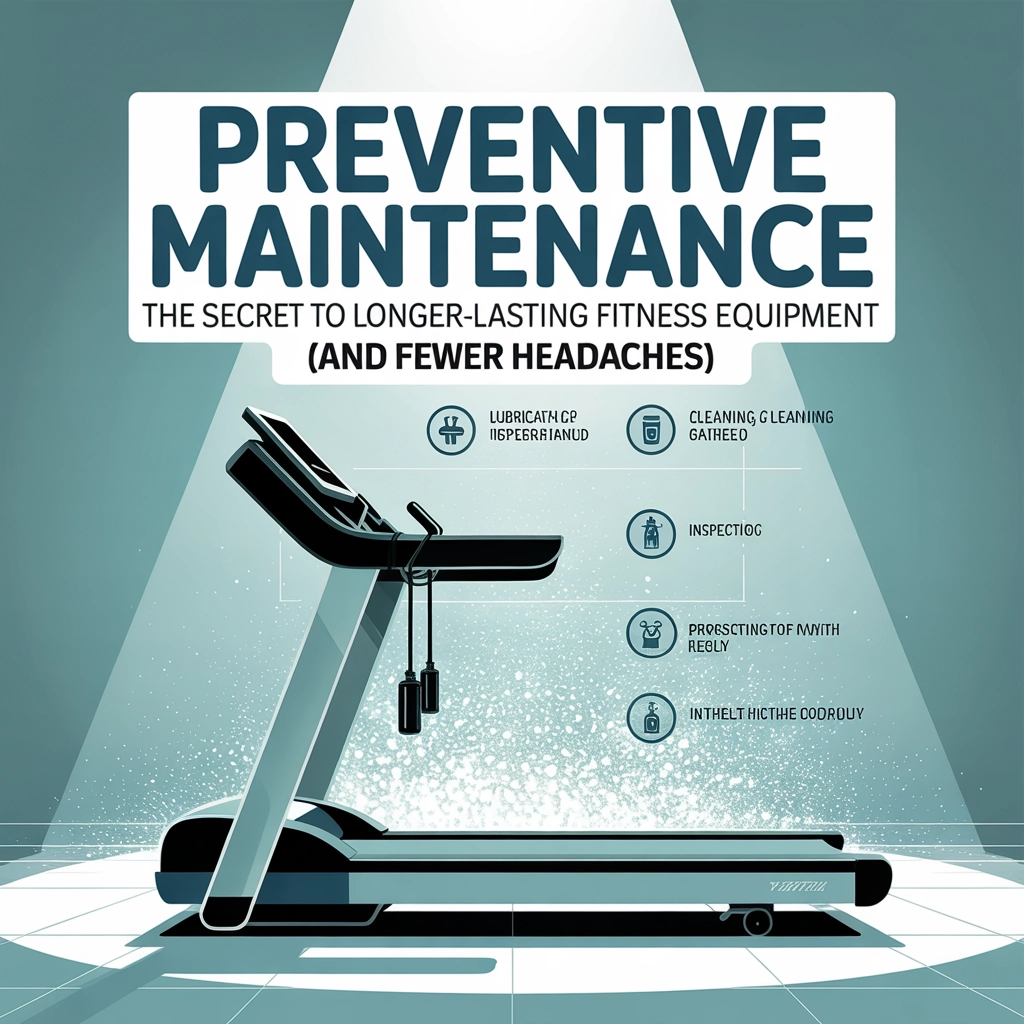
Preventive Maintenance: The Secret to Longer-Lasting Fitness Equipment (and Fewer Headaches!)
The Hidden Price of Procrastination
We’ve all been there. You hop on your favorite treadmill ready for a great workout, only to be greeted by an unsettling grinding noise. Or maybe you’re mid-set on a cable machine when suddenly there’s no resistance at all. These fitness equipment failures don’t just ruin your workout—they can put your safety at risk and lead to expensive repairs or replacements.
But here’s the thing: most of these headaches are completely avoidable.
Just like your car needs regular oil changes and tune-ups to keep running smoothly, your fitness equipment requires consistent attention to perform at its best. In the long run, preventive maintenance isn’t just smart—it’s cost-effective, safer, and absolutely essential for both home gym enthusiasts and commercial facility owners.
The True Cost of Neglect: More Than Just Repairs
When gym equipment breaks down, the visible costs are obvious—repair bills, replacement parts, and sometimes complete equipment replacement. But the hidden costs can be even more damaging:
- Shortened equipment lifespan: Most commercial fitness equipment should last 7-10 years with proper care. Without it? You might be looking at half that time.
- Increased injury risk: Worn cables, loose bolts, or malfunctioning safety mechanisms are accidents waiting to happen.
- Wasted workout time: Every minute spent dealing with broken equipment is time you could be making progress toward your fitness goals.
- Higher long-term expenses: Regular $200 maintenance visits are far cheaper than $2,000+ replacement costs.
For commercial gym owners, there’s even more at stake: member satisfaction, liability concerns, and your facility’s reputation.
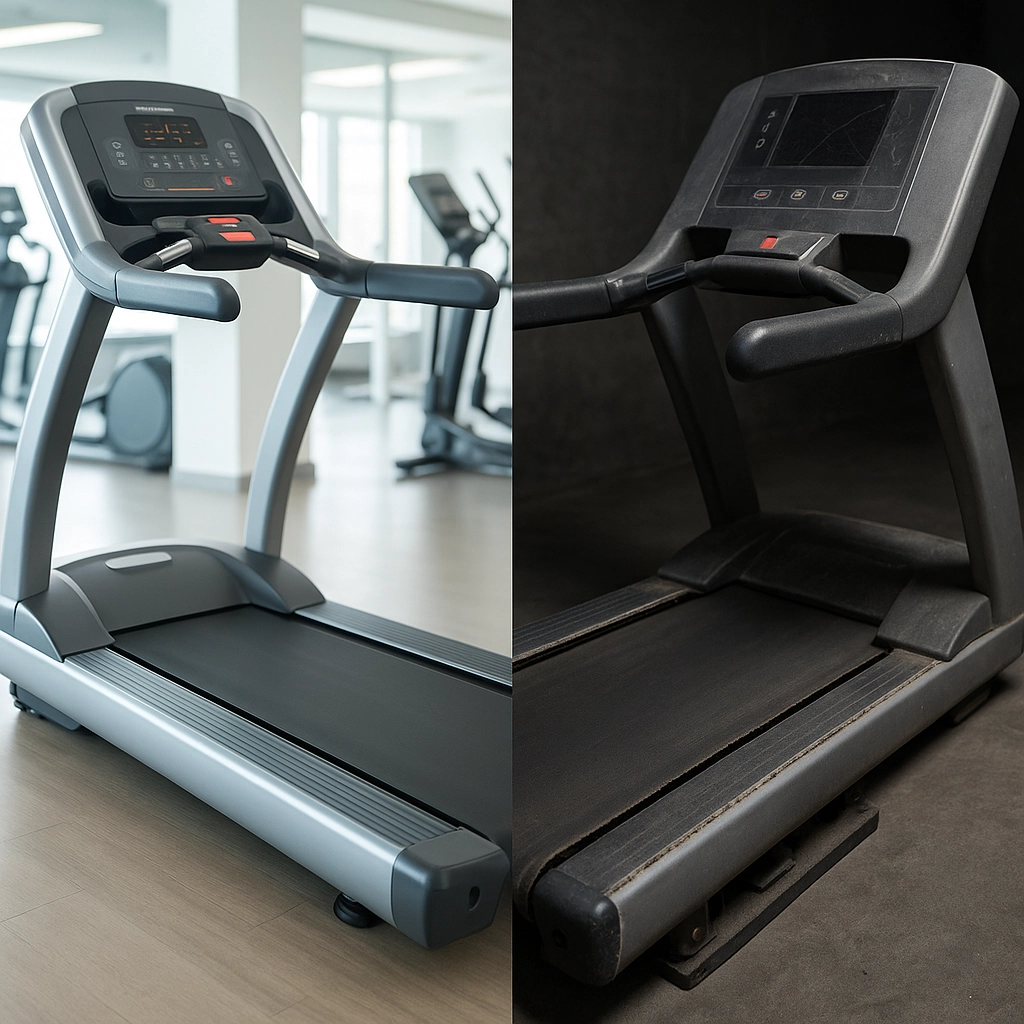
The Preventive Maintenance Trifecta: Inspect, Clean, Lubricate
Effective preventive maintenance boils down to three key activities that should become second nature:
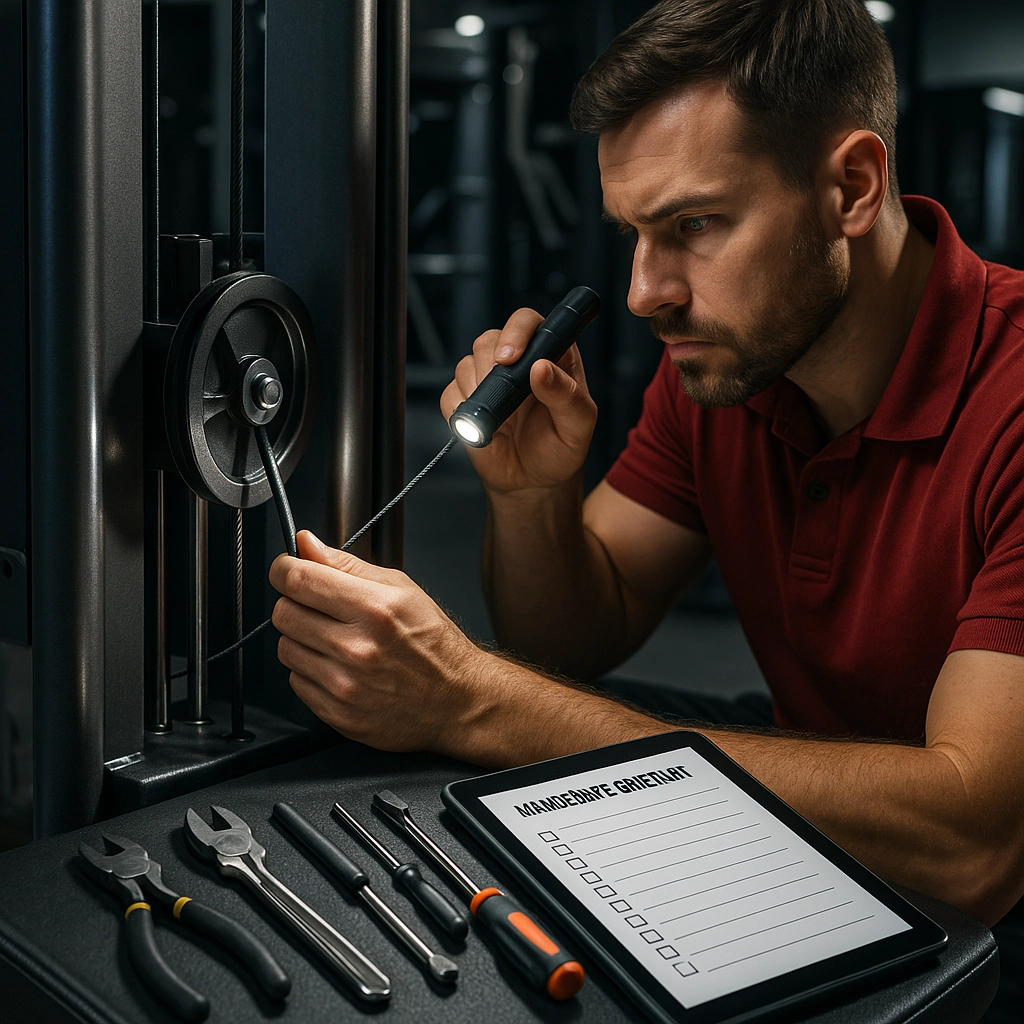
1. Regular Inspection
Get in the habit of checking these critical components before they become problems:
- Cables and belts: Look for fraying, unusual wear patterns, or visible damage
- Nuts and bolts: Tighten any loose connections before they fail during use
- Moving parts: Listen for unusual sounds or resistance during operation
- Electronic displays: Ensure all functions work properly
- Safety features: Test emergency stops and safety clips regularly
2. Thorough Cleaning
Cleaning isn’t just about aesthetics—it’s essential for proper function:
- Wipe down contact surfaces after every use to prevent sweat corrosion
- Remove dust and debris from motors and moving parts monthly
- Deep clean upholstery quarterly to prevent deterioration
- Check for dust accumulation in electronic components
- Vacuum under and around equipment to prevent dirt from being pulled into mechanical components
3. Proper Lubrication and Adjustment
This is where many DIY maintenance routines fall short:
- Treadmill decks and belts need specific lubrication schedules (usually every 3-6 months)
- Weight stack guide rods should be cleaned and lubricated monthly
- Cables and pulleys require inspection and occasional lubrication
- Bike chains and resistance systems need regular adjustment
- Elliptical rails and wheels function best with clean, lubricated surfaces
Pro tip: Always use manufacturer-recommended lubricants. The wrong product can actually accelerate wear or damage sensitive components.
Building Your Maintenance Schedule: The Roadmap to Equipment Longevity
Creating a maintenance schedule might seem tedious, but it’s the backbone of effective equipment care. Here’s how to build one that works:
For Home Gym Owners:
- Document your equipment: Create a simple spreadsheet listing each piece, purchase date, and manufacturer recommendations
- Set calendar reminders: Schedule recurring tasks for daily, weekly, monthly, and quarterly maintenance
- Keep maintenance supplies organized: Store all your cleaning solutions, lubricants, and tools in one accessible location
- Log completed maintenance: Track what you’ve done and when to spot emerging patterns
For Commercial Facilities:
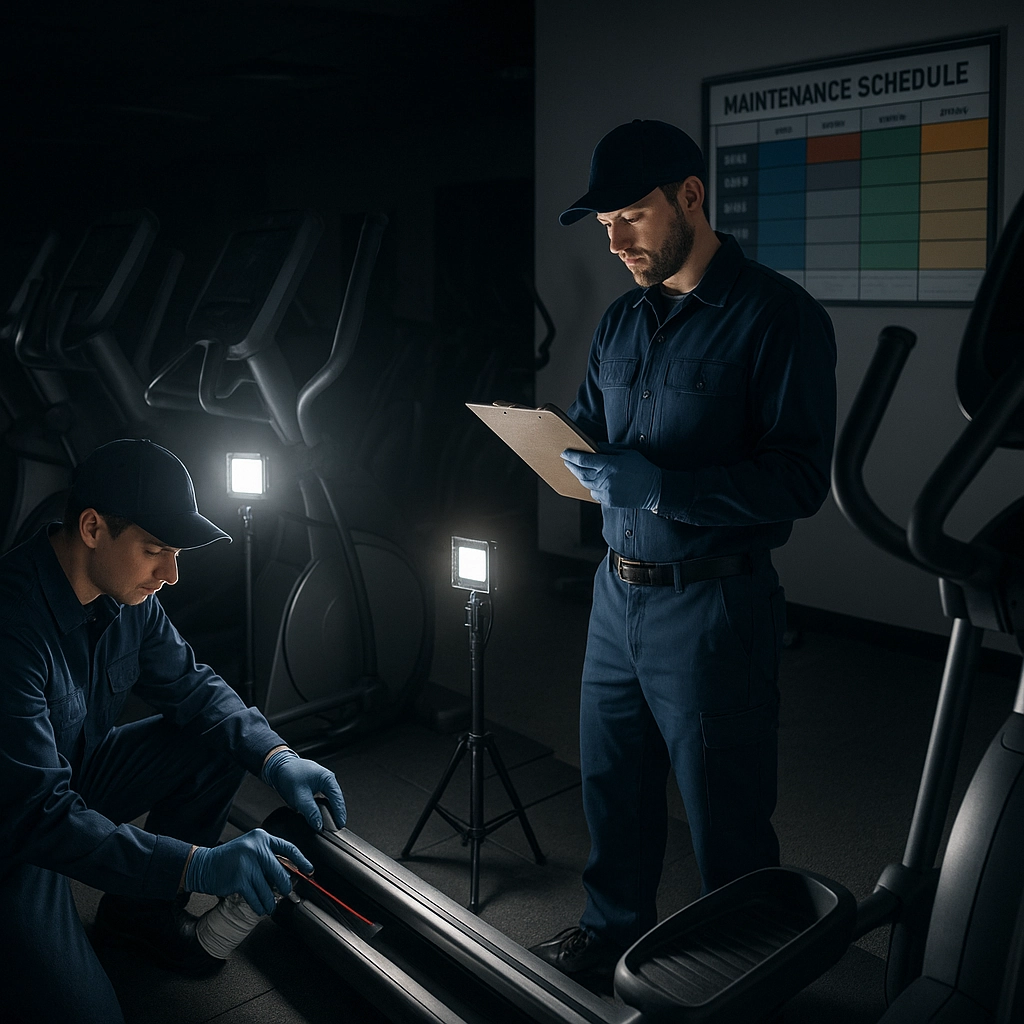
- Implement daily cleaning protocols: Staff should perform basic wipedowns and visual inspections daily
- Schedule weekly thorough inspections: Designate specific equipment zones for each day of the week
- Plan monthly deep cleans: Reserve time after hours for more comprehensive maintenance
- Book quarterly professional service: Partner with specialists like HeartBeat Fitness Repair for thorough evaluations
- Maintain detailed maintenance logs: These are crucial for warranty purposes and liability protection
Know Your Limits: DIY vs. Professional Maintenance
While regular cleaning and basic inspections are perfectly suited for DIY maintenance, some tasks require professional expertise:
Safe for DIY Maintenance:
- Wiping down equipment after use
- Tightening visible, accessible bolts
- Basic lubrication of exposed moving parts
- Belt adjustments (with proper knowledge)
- Visual inspections for wear and tear
When to Call the Professionals:
- Motor issues or electronic malfunctions
- Cable replacements or major adjustments
- Unusual noises or vibrations
- Calibration of complex systems
- Preventive maintenance on commercial equipment
- Annual thorough inspections
At HeartBeat Fitness Repair, we’ve seen countless situations where well-intentioned DIY repairs led to more expensive problems. When in doubt, consult with professionals who understand the intricacies of fitness equipment.
The Secret to Doubling Your Equipment’s Lifespan
The math is simple but compelling: consistent preventive maintenance can literally double the useful life of your fitness equipment. Here’s why:
- Reduced friction: Proper lubrication minimizes wear on moving parts
- Less strain on motors: Clean, well-adjusted belts reduce motor workload
- Prevented cascade failures: Fixing small issues prevents them from causing larger, connected problems
- Protected electronics: Clean, dust-free environments extend the life of circuit boards
- Maintained calibration: Equipment that runs as designed experiences less stress
One commercial gym client saved over $75,000 in replacement costs by implementing our recommended maintenance schedule. Their equipment lasted nearly twice as long as the industry average, all while reducing unexpected downtime by 87%.
The Business Case: ROI on Preventive Maintenance
For commercial gym owners, preventive maintenance isn’t an expense—it’s an investment with measurable returns:
- Extended equipment lifetime: Calculate the difference between 5-year and 10-year replacement cycles across your entire gym
- Reduced emergency service calls: After-hours emergency repairs often cost 2-3 times more than scheduled maintenance
- Lower insurance premiums: Many insurers offer discounts for documented maintenance programs
- Enhanced member experience: Reliable equipment leads to higher member satisfaction and retention
- Competitive advantage: Showcase your maintenance program as a commitment to quality and safety
Our commercial clients typically see a 300-400% return on their maintenance investment when factoring in all these benefits.
Real-World Success: From Breakdown Chaos to Maintenance Mastery
Let me share a quick story about a local fitness studio that transformed their operation through preventive maintenance:
When Flex Fitness opened their doors, they purchased top-of-the-line equipment but had no maintenance plan. Within 18 months, they were spending an average of $2,500 monthly on emergency repairs, with equipment constantly out of service.
After implementing our structured maintenance program:
- Emergency repair costs dropped by 92%
- Equipment downtime decreased from 18 days per month to just 2
- Member complaints about equipment issues virtually disappeared
- Their equipment replacement timeline extended from 5 years to 8+ years
The studio owner now describes their maintenance schedule as their “secret competitive advantage” in a crowded market.
Taking the First Step: Your Maintenance Action Plan
Whether you’re managing a commercial facility or a home gym, here’s how to get started today:
- Conduct an equipment inventory: Document model numbers, purchase dates, and current condition
- Download manufacturer maintenance guidelines: Most are available online
- Create a simple maintenance calendar: Start with the basics and build from there
- Assemble your maintenance toolkit: Gather appropriate cleaners, lubricants, and basic tools
- Consider a professional assessment: Book a consultation to establish baseline equipment condition and identify immediate needs
Remember, the goal isn’t perfection—it’s progress. Even implementing basic preventive maintenance will yield significant benefits compared to a reactive approach.
Invest Now or Pay Later: The Choice Is Yours
When it comes to fitness equipment, there’s an unavoidable truth: you’ll either invest in maintenance now or pay for repairs and early replacement later. The former is planned, affordable, and minimally disruptive. The latter is unexpected, expensive, and often comes at the worst possible time.
At HeartBeat Fitness Repair, we’ve seen this scenario play out thousands of times. The facilities and individuals who thrive are those who view maintenance not as an optional expense but as an essential investment in their equipment’s longevity and performance.
Ready to transform your approach to fitness equipment care? Contact us today to learn how our customized maintenance programs can save you money while extending the life of your fitness investments. Your equipment—and your wallet—will thank you.

 Heartbeat Fitness Repair
Leave a comment