
Setting up a home gym is one of the best ways to commit to long-term health and fitness. But if you want your treadmill to keep running, your dumbbells to stay shiny, or your squat rack to remain sturdy, routine maintenance is essential. At HeartBeat Fitness Repair, we believe a little regular care keeps your equipment safe, functional, and ready for every sweat session. Here’s a complete, no-nonsense guide to help you get the most out of your investment.
The Daily Difference: Quick Habits That Pay Off
1. Wipe Down, Every Time
Sweat isn’t just a badge of honor—it’s a recipe for bacteria growth and metal corrosion if left behind. After each workout:
- Grab a damp microfiber cloth and swipe down high-touch surfaces—think handles, seats, touch screens, and that barbell you just crushed bench with.
- Use a gentle, non-abrasive cleaner. Avoid anything with bleach or ammonia, which can erode finishes and dry out grip materials.
- For gym mats and flooring, a weekly mop with diluted mild soap will keep things fresh too.
2. Catch Spills and Moisture Early
Even small drops of sweat can create rust spots or mildew on your equipment. Make it a habit to:
- Remove water bottles or towels left behind.
- Dry any visible moisture promptly—especially on metal surfaces and electronics.

Weekly Wins: Inspect and Protect
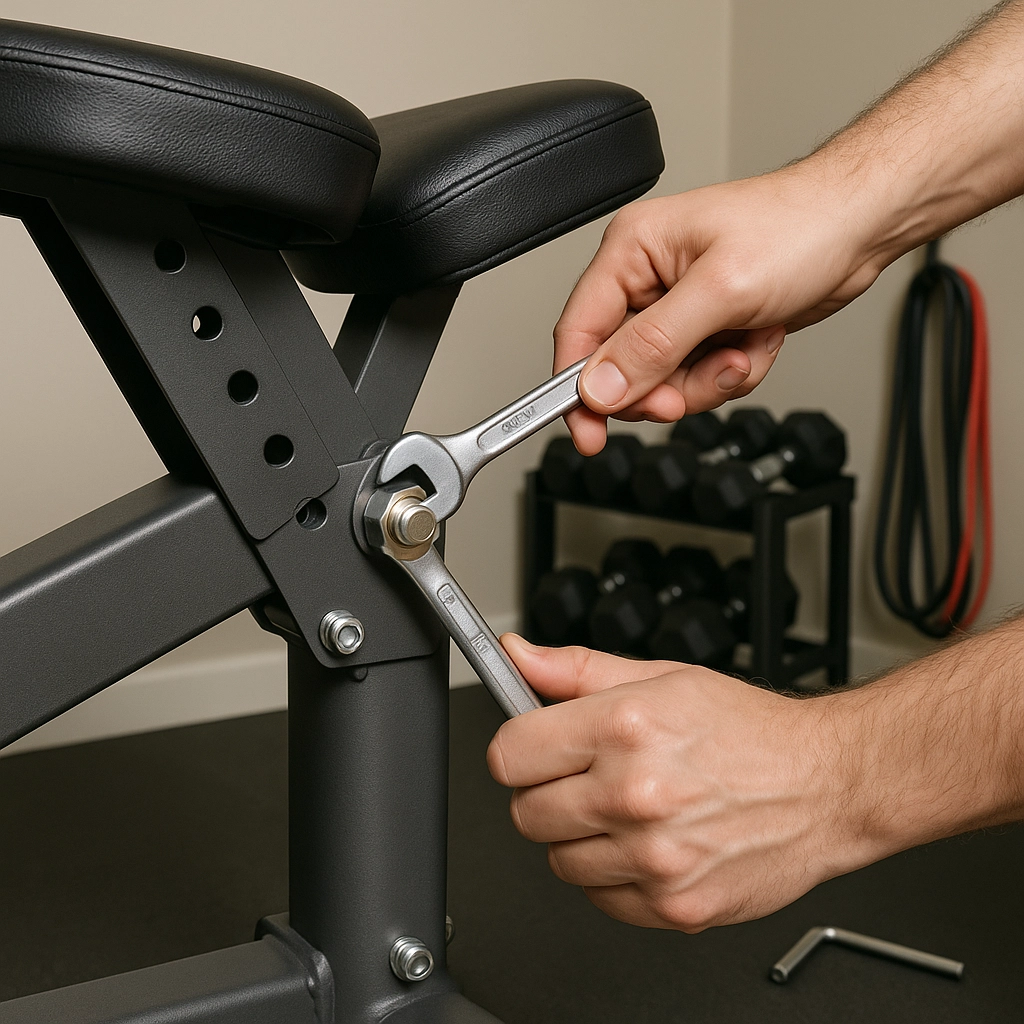
3. Give Bolts and Screws a Once-Over
Movement from workouts will slowly loosen hardware. A wobbly bench or shifting squat rack is more than annoying—it’s unsafe. Every week:
- Check all bolts, nuts, and screws on benches, racks, and cardio equipment.
- Tighten with a wrench or Allen key. For adjustable or moving equipment (like cable machines), reference your manual for torque specs where needed.
- Pay special attention after moving equipment or periods of heavy use.
4. Lubricate Moving Parts
Squeaks or resistance in pulleys, hinges, and guide rods mean it’s time for some lubrication:
- Use a silicone-based lubricant (never oil or WD-40), especially where plastic and metal meet.
- Cables and weight stacks usually need lubing every 3–6 months, but check monthly if you’re a frequent user.
- Wipe away any excess to prevent dirt buildup.
Monthly Deep Dives: Cleaning and Calibrating
5. Deep Clean Hardworking Machines
Sweat, dust, and grime love to hide in corners. Every month:
- Carefully disassemble removable parts of treadmills, ellipticals, or bikes (always unplug first!).
- Use soft brushes, small vacuums, or compressed air to reach inside consoles, around fans, and beneath belts.
- Reassemble per manufacturer instructions and double-check safety locks or catches.
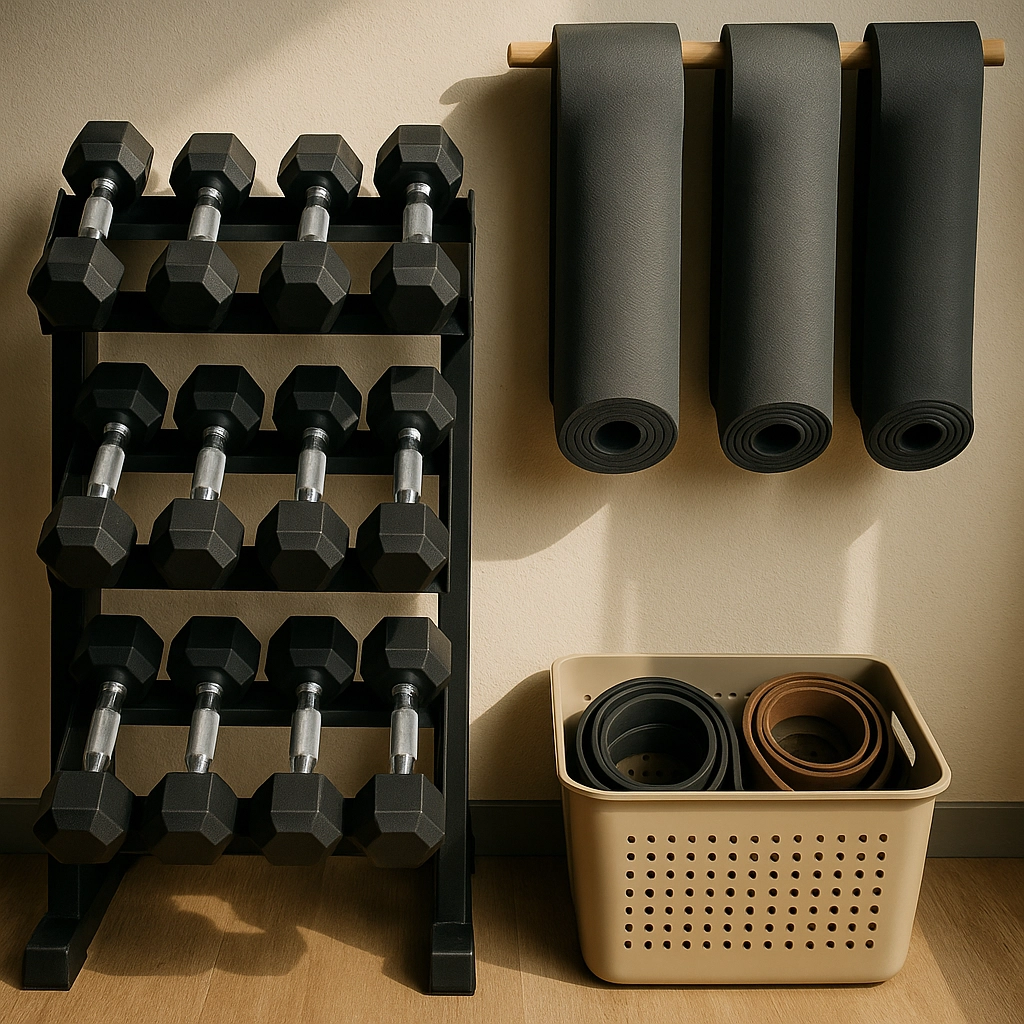
6. Home Gym Equipment Storage Table
7. Rust Prevention for Metal Gear
- Wipe metal surfaces with a dry cloth after each session.
- If rust shows up, gently remove it with a soft-bristle brush and apply a rust inhibitor or light coat of silicone spray.
- Avoid storing metal weights or barbells in garages or basements susceptible to humidity. A climate-controlled space is always the best option.
- Place moisture absorbers or silica packs in larger storage areas, especially for unused or backup gear.
Seasonal and Professional Maintenance: The Next Level
8. Schedule a Professional Check-Up
Even with diligent home maintenance, a set of expert eyes makes all the difference. Once or twice a year:
- Book a technician for treadmill, elliptical, or multi-gym inspections. They’ll check belts, motors, calibration, and electrical systems you might not be able to access or safely maintain.
- If you hear odd noises or feel performance slipping, don’t ignore it—reach out to pros like us at HeartBeat Fitness Repair. Book a service here: https://www.theequipmentfixer.com/booking
9. Safety and Calibration
Advanced machines—think smart bikes, rowers, treadmills—sometimes drift from calibration. Follow your manufacturer’s guidelines for:
- Checking speed, incline, or resistance settings.
- Recalibrating sensors, especially for heart rate grips or digital displays.
- Software updates—download the latest firmware for smart devices periodically for improved accuracy and features.
10. Review Manuals and Warranties
- Keep all manuals in a single, easy-to-access file or folder.
- Familiarize yourself with warranty terms; avoid actions that might void coverage, like using the wrong lubricants or cleaning methods.
- Register new equipment right away for speedy support if needed.
Troubleshooting and When to Call for Help
Common Issues:
- Equipment feeling unstable? Check all hardware and, if in doubt, don’t use it until fixed.
- Resistance bands or cables look frayed? Replace them before they fully snap.
- Treadmill belt skipping or sticking? Consider a professional adjustment.
If you run into recurring issues—like frequent electrical faults, excessive rust, or malfunctioning consoles—don’t play the guessing game. Our team offers friendly advice and in-home service you can trust. Reach us here: https://www.theequipmentfixer.com/contact-us
Making Maintenance Part of Your Fitness Journey
Just like stretching or warming up, treating equipment maintenance as part of your routine is the secret to a safer, more enjoyable home gym. Want more tips or interested in regular tune-ups to keep your equipment in peak shape? Learn more about our mission at HeartBeat Fitness Repair and let’s keep those heartbeats going strong.
Stay safe, train hard, and take pride in your home gym—it’s an investment in your well-being as much as your workouts!

 Heartbeat Fitness Repair
Leave a comment