Your gym equipment is the heart of your fitness routine. Whether you’re running a commercial facility or maintaining a home gym, when that equipment breaks down, you need it fixed fast and fixed right. But here’s the thing – not all repair services are created equal.
The fitness industry has evolved dramatically, with sophisticated equipment that requires specialized knowledge. Choosing the wrong repair service can cost you time, money, and potentially put your members or family at risk. That’s why we’ve compiled this essential guide to help you make the smartest choice when your equipment needs professional attention.
1. Verify Their Warranty Knowledge and Policies
Before anyone touches your equipment, understand how repairs will affect your warranty status. Many gym owners and home fitness enthusiasts make the costly mistake of hiring repair services that void manufacturer warranties.
A professional repair service should always ask about your equipment’s warranty status first. They should know which manufacturers they’re authorized to work with and be transparent about any warranty implications. If your equipment is still under warranty, they might recommend going through authorized channels – and that’s actually a good sign of integrity.
Red flag: Any repair service that doesn’t ask about warranties or dismisses warranty concerns is not looking out for your best interests.
2. Demand Proper Credentials and Certifications
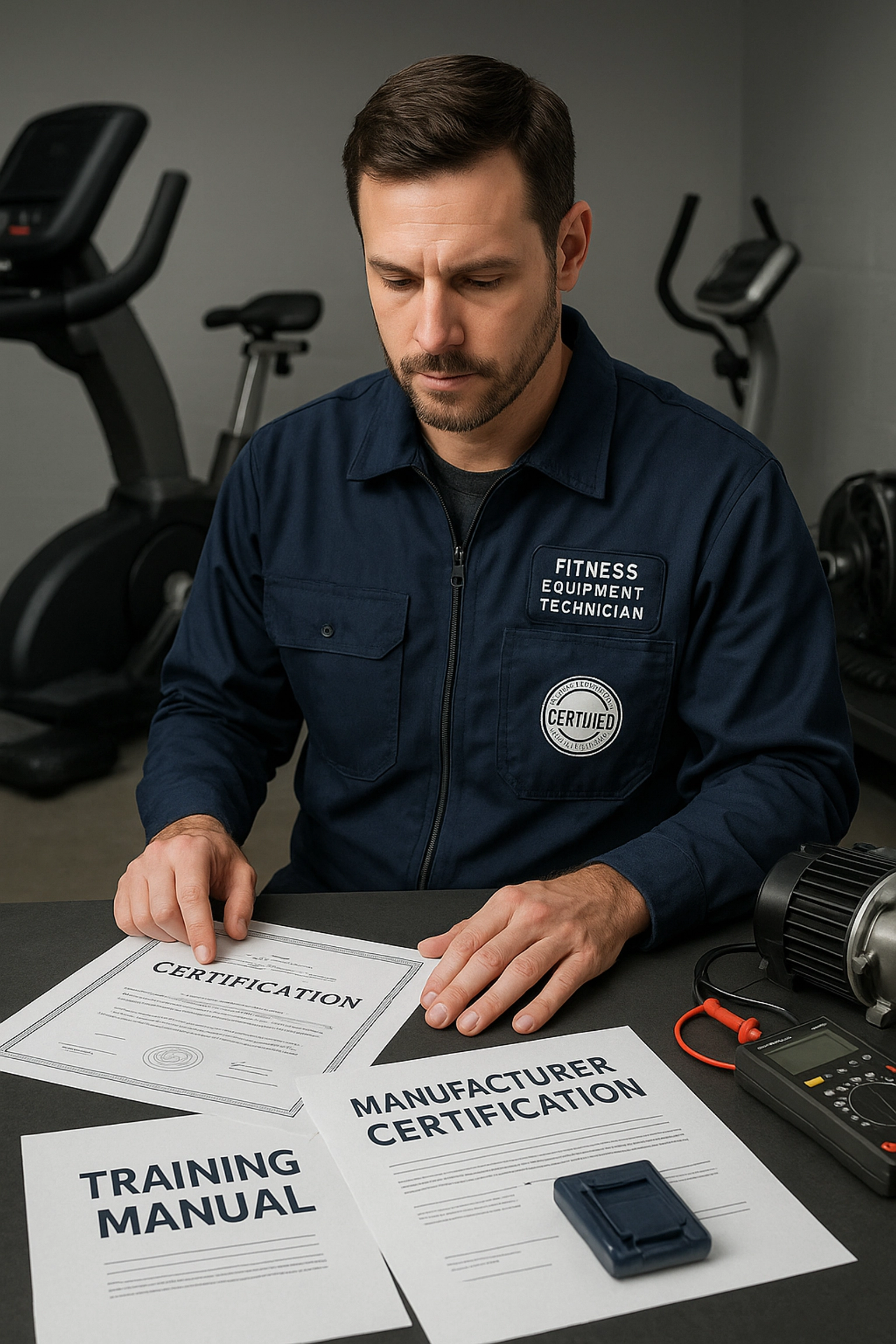
The fitness equipment repair industry has specialists and generalists. You want specialists. Ask to see certifications from major equipment manufacturers like Technogym, Life Fitness, Precor, or NordicTrack. These certifications aren’t easy to get – they require training, testing, and ongoing education.
Beyond manufacturer certifications, look for technicians with electrical and mechanical backgrounds. Some of the best repair technicians come from backgrounds in HVAC, automotive, or industrial equipment repair, bringing transferable skills to fitness equipment.
3. Understand Their Parts Sourcing Strategy
This is where many repair services cut corners, and it can come back to haunt you. When your equipment needs replacement parts, you’ll typically have two options: Original Equipment Manufacturer (OEM) parts or aftermarket alternatives.
OEM parts are made by the original manufacturer and are guaranteed to fit and perform exactly as intended. They cost more but maintain equipment integrity and often preserve warranty coverage. Aftermarket parts are cheaper but may have quality variations.
A trustworthy repair service will explain both options, including cost differences and performance implications. They should let you make the final decision based on your budget and priorities, not automatically choose the cheapest option.
4. Get the Real Story on Repair vs. Replacement Economics
Here’s where experience really shows. A seasoned repair professional should help you understand when fixing equipment makes financial sense versus when you’re throwing good money after bad.
Generally, if repair costs exceed 50% of the equipment’s current replacement value, replacement might be the smarter choice. But this calculation gets more complex with factors like:
- How old the equipment is
- How heavily it’s been used
- Whether this is a recurring problem
- Parts availability for older models
- Your budget timeline
The best repair services will give you an honest assessment, even if it means less work for them. This kind of integrity builds long-term relationships.
5. Verify Insurance and Licensing Requirements
Professional repair services should carry both general liability insurance and workers’ compensation. This protects you if something goes wrong during the repair process or if a technician gets injured on your property.
Ask to see current insurance certificates – don’t just take their word for it. If they’re working in a commercial setting, they may need additional certifications depending on your local regulations.
Many states and municipalities have specific licensing requirements for businesses working on electrical or mechanical equipment. A legitimate repair service will have all necessary licenses and be happy to provide documentation.
6. Insist on Detailed, Written Estimates
Verbal estimates are basically worthless. Professional repair services should provide written estimates that include:
- Specific problems identified during diagnosis
- Parts needed (with part numbers when possible)
- Labor hours required
- Total cost breakdown
- Timeline for completion
- Warranty on repairs performed
Be cautious of estimates that are too vague or services that want to “take a look first” without providing some kind of diagnostic structure. While some problems genuinely can’t be fully diagnosed without opening equipment up, experienced technicians can usually provide reasonable cost ranges.

7. Understand Response Times and Availability
Equipment downtime costs money, whether it’s disappointed gym members or disrupted home workout routines. Different repair services offer different service levels:
Emergency service: Usually available within 24 hours, often with premium pricing
Priority service: Typically 2-3 day response time
Standard service: May take a week or more to schedule
Make sure you understand what level of service you’re getting and what it costs. Some services offer maintenance contracts that include priority response times – these can be valuable for commercial facilities with high equipment utilization.
8. Check References and Online Reviews Thoroughly
Don’t just look at the number of stars – read the actual reviews. Pay attention to:
- How the service handles problems when they arise
- Whether repairs lasted or if customers experienced repeat issues
- Professionalism and reliability of technicians
- Transparency in pricing and communication
For commercial facilities, ask for references from similar businesses. A service that mainly works on home treadmills might not be the best choice for commercial-grade strength equipment.
Pro tip: Check with local gym owners, even if they’re not directly competitive with your business. The fitness community is often willing to share recommendations for good service providers.
9. Evaluate Their Diagnostic Process
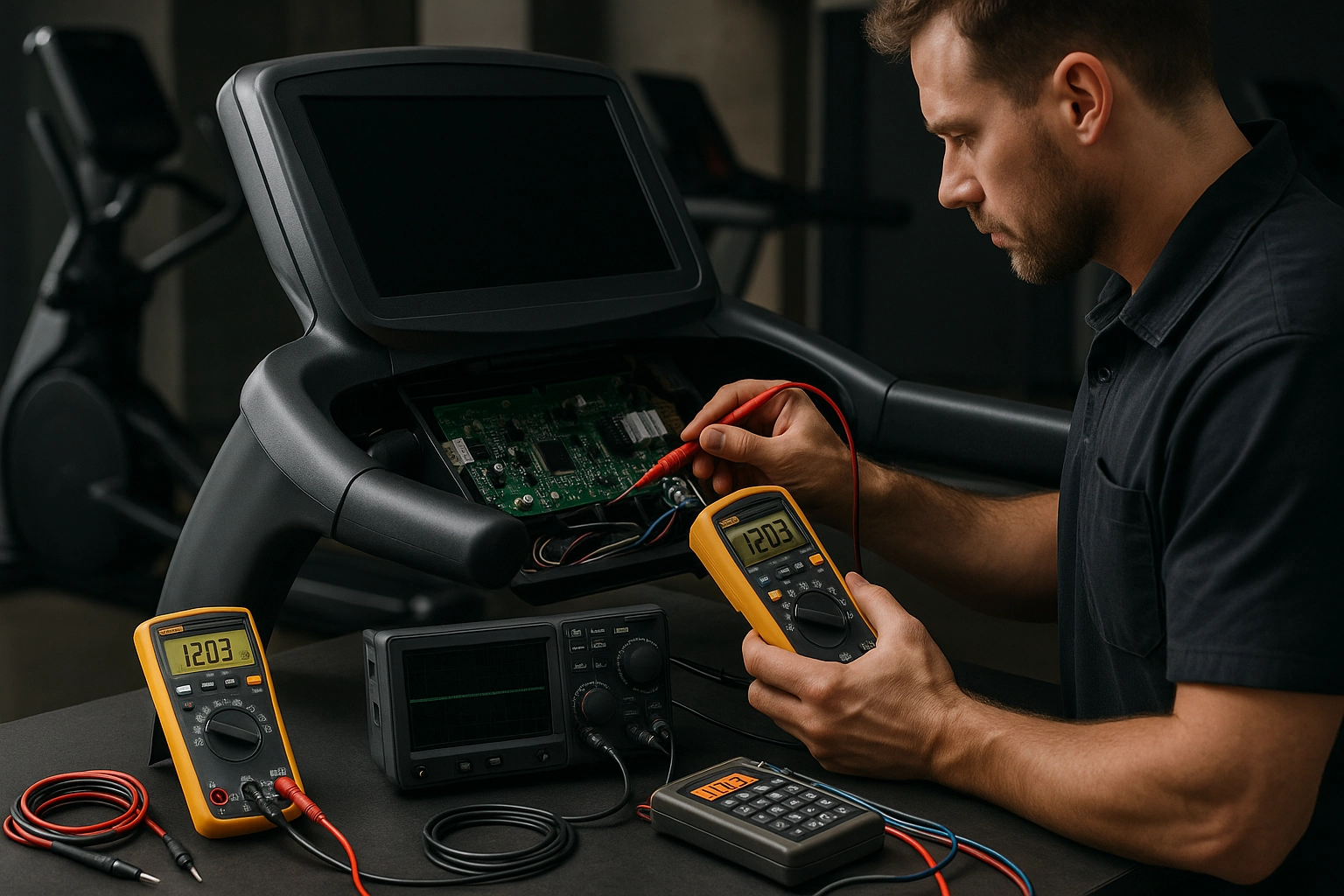
Equipment problems often have multiple potential causes. The best repair technicians approach diagnosis systematically rather than guessing and replacing parts until something works.
Ask potential repair services to describe their diagnostic process. They should:
- Start with the most likely causes based on symptoms
- Use appropriate testing equipment
- Check safety systems during any repair
- Look for related issues that might cause future problems
- Document their findings clearly
A technician who immediately suggests expensive repairs without proper diagnosis might not be your best choice.
10. Ensure Follow-up Support and Repair Warranties
Quality repair services stand behind their work with meaningful warranties – typically 90 days to one year depending on the type of repair. But warranty terms vary significantly:
- Parts warranty: Coverage if replacement parts fail
- Labor warranty: Coverage if the same problem recurs
- Workmanship warranty: Coverage if repair-related issues develop
Also ask about follow-up support. Will they check in to ensure repairs are holding up? Do they provide maintenance recommendations to prevent future problems? The best services view each repair as the beginning of an ongoing relationship rather than a one-time transaction.
Making Your Decision
The fitness equipment repair industry includes everything from highly skilled specialists to weekend warriors looking to make quick money. Taking time to evaluate potential services against these criteria can save you significant headaches and expense down the road.
Remember, the cheapest option rarely delivers the best long-term value. Focus on finding repair services that combine technical expertise with integrity and customer service. Your equipment – and your wallet – will thank you.
When equipment breaks down, it’s tempting to hire the first available service just to get back to your workout routine. But investing a little time in choosing the right repair partner pays dividends in reliability, safety, and long-term equipment performance.
Your fitness goals are too important to trust to just anyone. Choose repair services that share your commitment to excellence and keeping your equipment running at peak performance for years to come.
If you’re looking for reliable gym equipment repair services that meet all these criteria, contact us to discuss your specific needs. We’re committed to transparent, professional service that keeps your fitness journey on track.
 Heartbeat Fitness Repair
Leave a comment