Your home gym represents a serious investment. Whether you’ve got a basic setup or a fully-loaded strength station, those machines and weights aren’t cheap. But here’s the kicker – most people are unknowingly making costly mistakes that could turn their fitness dreams into financial nightmares.
We’ve seen it all at HeartBeat Fitness Repair. Preventable breakdowns that cost thousands. Simple oversights that lead to dangerous equipment failures. The good news? Every single one of these expensive mistakes is totally avoidable once you know what to look for.
Mistake #1: Skipping Regular Safety Inspections
The Cost: A snapped cable during a lat pulldown can cause serious injury – think emergency room visits, potential surgery, and months of physical therapy. We’re talking $10,000+ in medical bills, not to mention the pain and lost training time.
Most people treat their home gym equipment like it’s indestructible. They’ll meticulously maintain their car but completely ignore that $3,000 home gym system until something goes wrong. Big mistake.
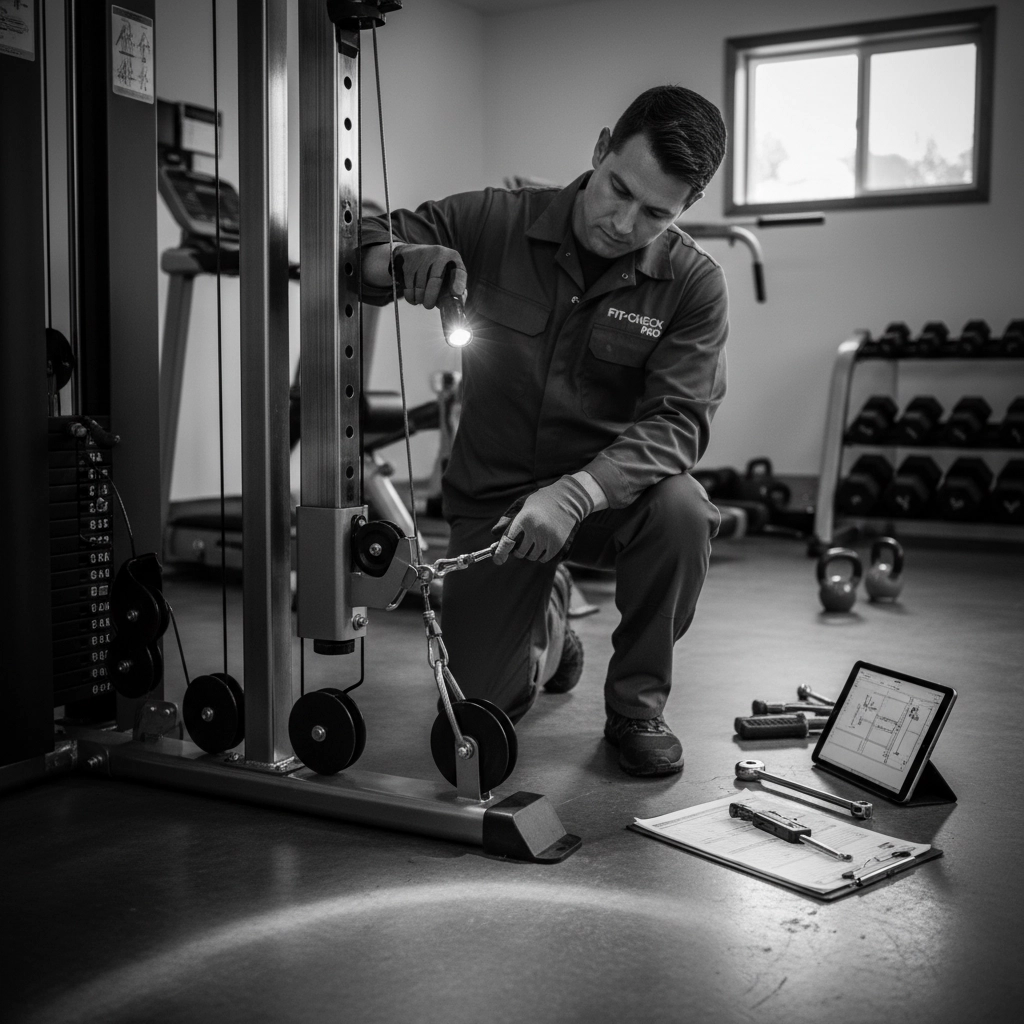
The Fix: Do a monthly 10-minute safety check. Look for frayed cables, loose bolts, worn pulleys, and any unusual wear patterns. Check weight stacks for smooth operation and inspect all moving parts. If something looks off, don’t use it – period.
Mistake #2: Ignoring Warning Signs
The Cost: That “minor” squeaking sound you’ve been ignoring? It could signal a bearing failure that leads to a complete replacement of your equipment’s pulley system. What starts as a $50 repair becomes a $1,500 replacement.
Equipment talks to you through sounds, vibrations, and subtle changes in operation. When you ignore these early warnings, small problems snowball into major failures.
The Fix: Address issues immediately. Strange noises, wobbling, sticking movements – these are all red flags. Document what’s happening and when it occurs. Sometimes it’s just a loose bolt, but catching it early prevents catastrophic failure.
Mistake #3: Exceeding Weight Limits (Yes, They Matter)
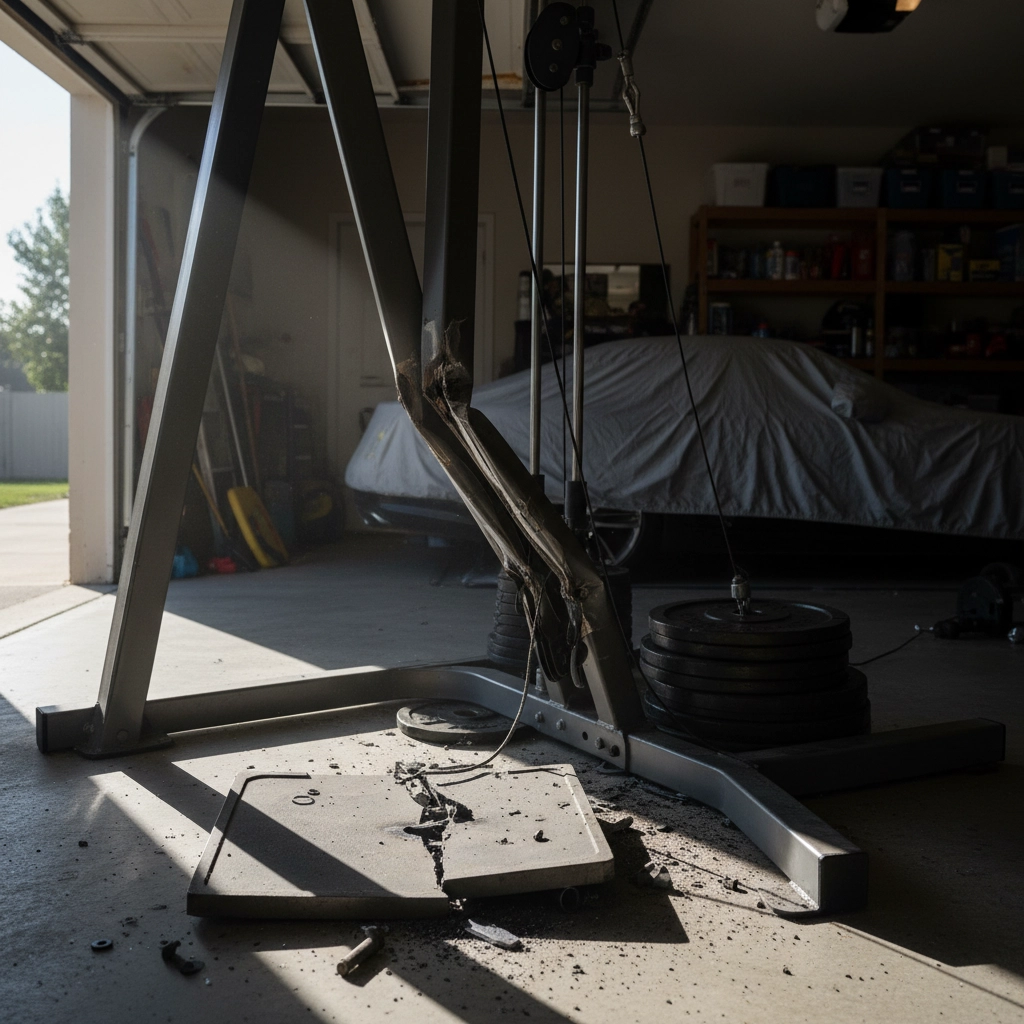
The Cost: Home gym equipment has weight limits for a reason. Exceed them regularly, and you’re looking at bent frames, cracked welds, and dangerous structural failures. Replacing a damaged multi-station can easily cost $2,000-$4,000.
We see this constantly – people assume that if they can physically load more weight, the machine can handle it. Not true. Weight limits include safety margins, but they’re not suggestions.
The Fix: Know your limits and respect them. If you’re outgrowing your equipment’s capacity, it’s time to upgrade, not overload. Better to invest in heavier-duty equipment than to risk injury and total replacement costs.
Mistake #4: Neglecting Cable and Belt Maintenance
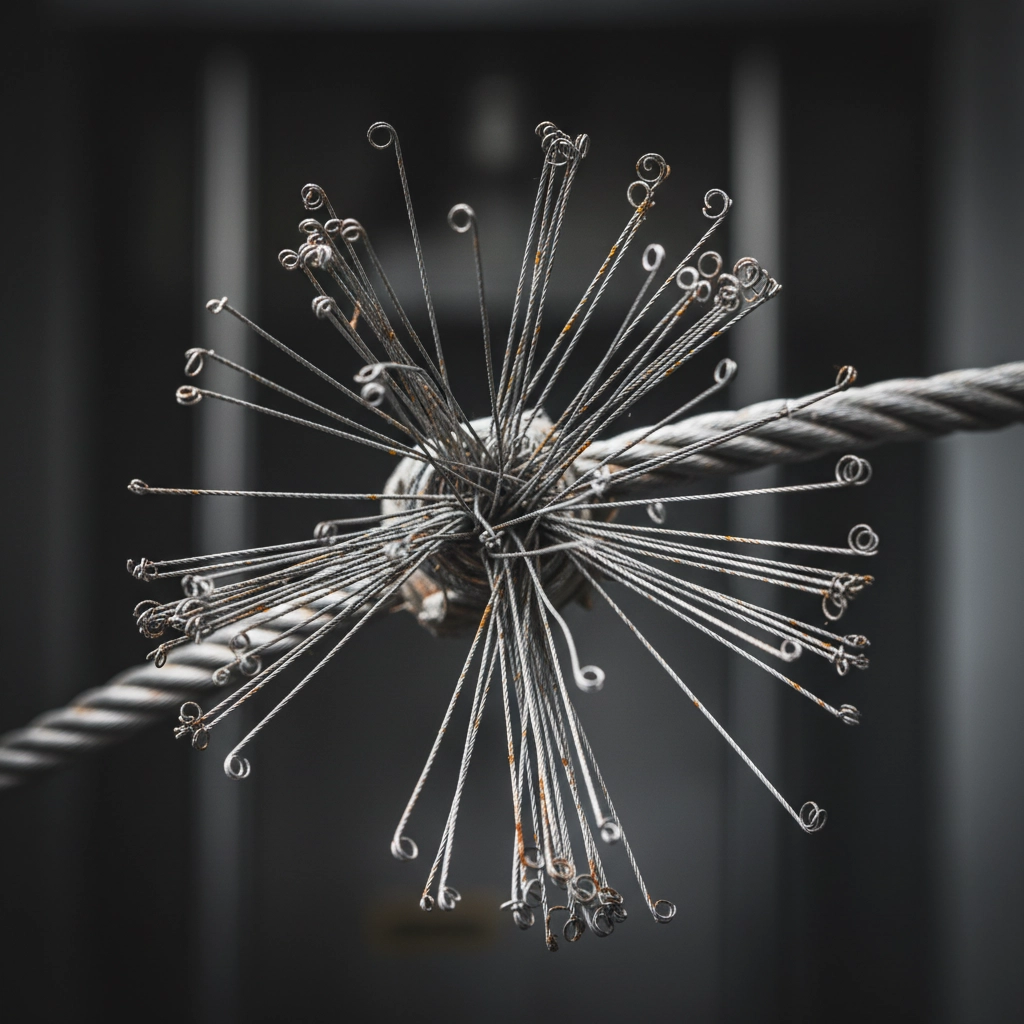
The Cost: A snapped cable or belt doesn’t just stop your workout – it can whip around and cause serious injury. Plus, replacing cables and belts on commercial-grade equipment can run $200-$500 per component, not including labor.
Cables and belts are the workhorses of strength equipment. They handle thousands of repetitions under tension. Without proper care, they deteriorate faster than you’d expect.
The Fix: Inspect cables monthly for fraying, kinks, or thin spots. Keep them clean and properly lubricated according to manufacturer specs. Replace cables at the first sign of wear – it’s way cheaper than dealing with a catastrophic failure.
Mistake #5: Forgetting About Lubrication
The Cost: Lack of lubrication causes premature wear on all moving parts. What should last 10 years might fail in 2-3 years. Rebuilding a neglected weight stack system can cost $800-$1,200 in parts and labor.
Most home gym owners never think about lubrication until something starts sticking or making noise. By then, damage is already happening.
The Fix: Follow the manufacturer’s lubrication schedule religiously. Use only recommended lubricants – the wrong type can actually attract dirt and cause more problems. Set calendar reminders so you don’t forget.
Mistake #6: Poor Environmental Control
The Cost: Moisture, temperature swings, and poor ventilation destroy equipment from the inside out. Rust damage alone can require complete replacement of affected components. A rusted weight stack? That’s $600-$1,000 right there.
Garages, basements, and outdoor spaces present unique challenges. Many people don’t realize how much environment affects equipment longevity until they’re dealing with rust, corrosion, or warped components.
The Fix: Control humidity with a dehumidifier if needed. Ensure good ventilation. Keep equipment away from water sources. Use covers when equipment isn’t in use, especially in garages or outdoor areas. A $200 dehumidifier can save you thousands in equipment replacement.
Mistake #7: DIY Repairs Gone Wrong
The Cost: We’ve seen home repairs that turned $100 problems into $2,000 disasters. Incorrect parts, improper installation, or making adjustments without understanding the system can create dangerous situations and void warranties.
YouTube makes everything look easy, but fitness equipment repair requires specific knowledge and tools. Using the wrong bolt grade or missing a crucial adjustment can compromise safety and functionality.
The Fix: Know your limits. Simple maintenance like cleaning and lubrication? Go for it. But when it comes to replacing cables, adjusting tension systems, or working with weight stacks, call in professionals. The repair cost is usually far less than the replacement cost of damaged equipment.
At HeartBeat Fitness Repair, we see these mistakes repeatedly. The frustrating part? Most are completely preventable with basic maintenance and attention to warning signs.
The Smart Prevention Strategy
Here’s what successful home gym owners do differently:
They schedule preventive maintenance – Rather than waiting for problems, they have their equipment professionally serviced annually. This catches small issues before they become expensive failures.
They keep maintenance logs – Simple records of when they cleaned, lubricated, or noticed changes help track equipment health and catch patterns early.
They invest in quality from the start – Buying reliable equipment and maintaining it properly costs less long-term than constantly replacing cheap machines.
They know when to call professionals – They handle basic maintenance themselves but recognize when expertise is needed.
Your Next Step
Don’t wait for a costly breakdown to get serious about equipment maintenance. Start with that monthly safety inspection we mentioned. Make it as routine as checking your tire pressure.
And if you’re in our service area, consider our preventive maintenance programs. We’ve designed them specifically to catch these costly mistakes before they happen. A small investment in professional care saves thousands in repairs and keeps you training safely.
Your home gym should be enhancing your life, not creating expensive headaches. With proper care and attention, that equipment investment will serve you well for years to come. Just don’t make these seven costly mistakes – your wallet (and your workout routine) will thank you.
Remember, when it comes to fitness equipment, an ounce of prevention really is worth a pound of cure. Or in this case, thousands of dollars in cures.

 Heartbeat Fitness Repair
Leave a comment