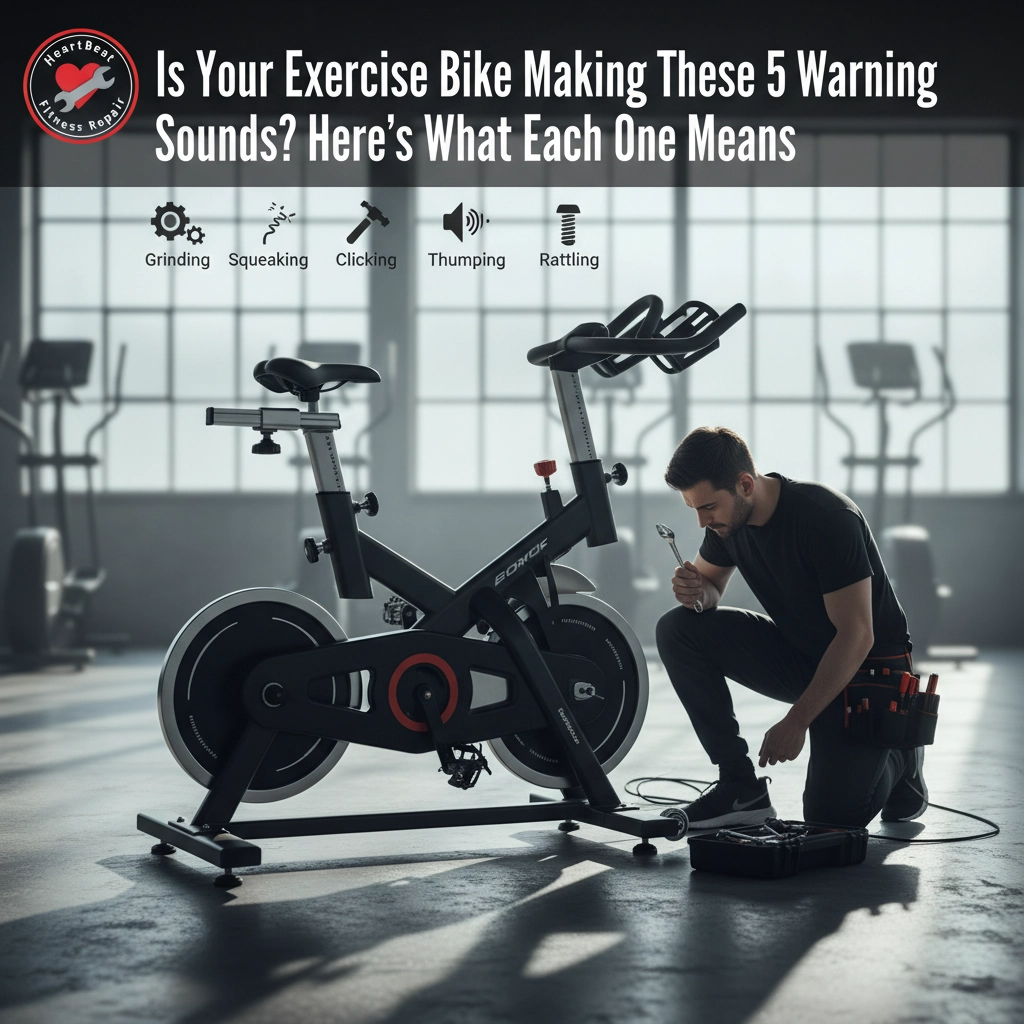
Your exercise bike has been your faithful workout companion for months, maybe even years. But lately, you’ve noticed some unusual sounds during your sessions. That rhythmic squeak when you pedal faster. The occasional grinding noise when you increase resistance. Maybe even some mysterious clicking that wasn’t there before.
Here’s the thing: your exercise bike is trying to communicate with you. These sounds aren’t just random noise: they’re warning signals that can save you from costly breakdowns, dangerous malfunctions, and interrupted fitness routines. Understanding what each sound means is the difference between a quick fix and a major repair bill.
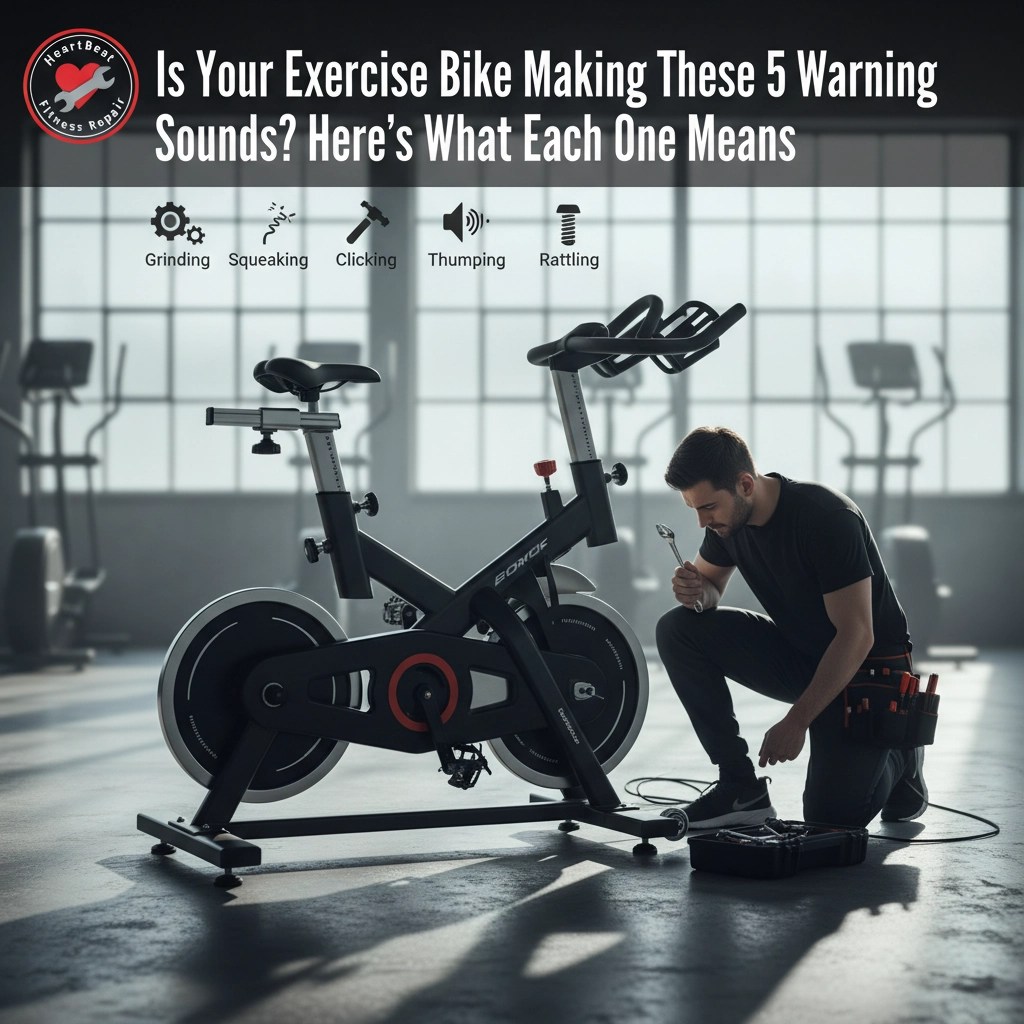
Let’s decode the five most common warning sounds your exercise bike makes and what your machine is really trying to tell you.
1. The Grinding Sound: Your Bike’s Emergency Alert
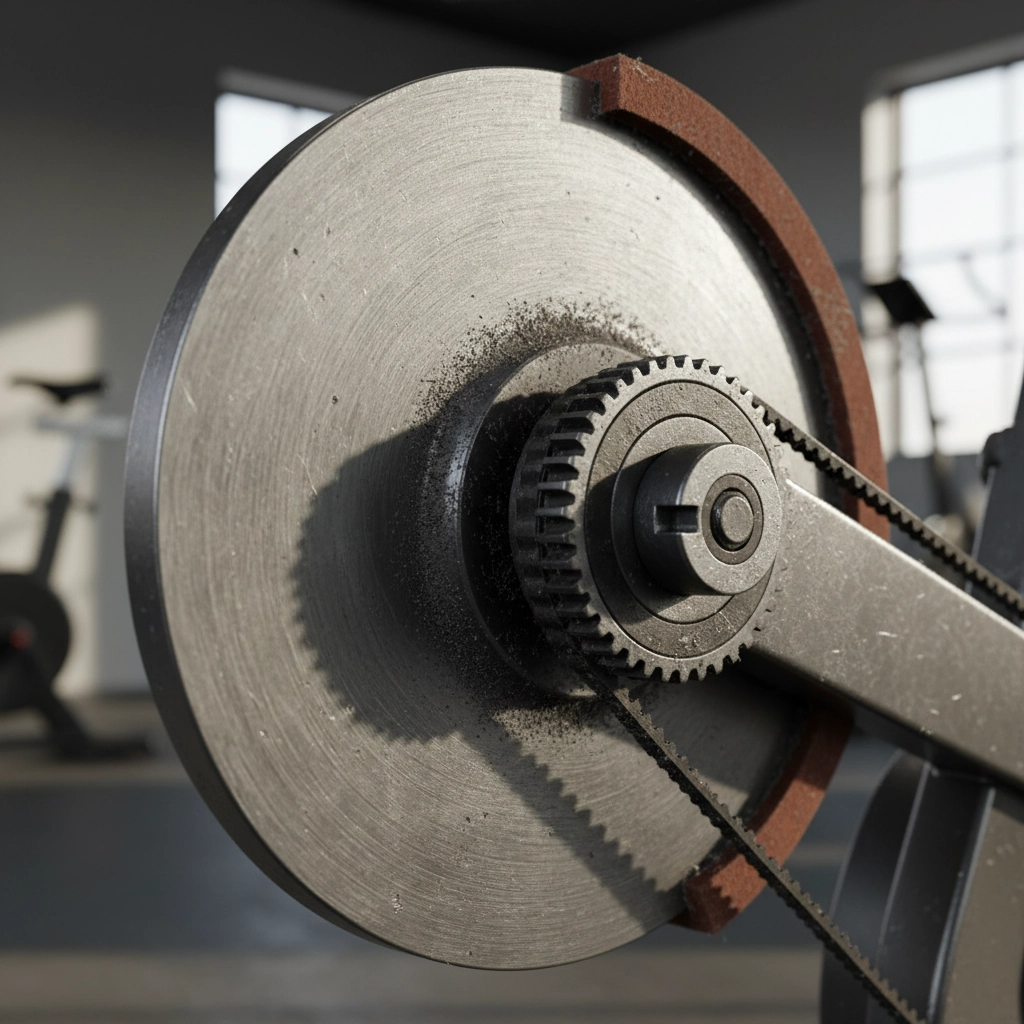
If your exercise bike sounds like it’s chewing gravel, pay attention immediately. Grinding noises are the most serious warning your equipment can give you, and they typically signal worn drive components, insufficient lubrication, or debris buildup in critical areas.
What causes grinding sounds:
- Worn bearings in the flywheel assembly
- Dried-out chain drives lacking proper lubrication
- Loose pedals creating metal-on-metal contact
- Dust and debris accumulated in moving parts
- Brake pads that have shifted out of alignment
The grinding usually gets worse under pressure: when you’re pushing hard during high-intensity intervals or climbing virtual hills. What starts as a soft scraping can quickly escalate into a clunky, unstable ride that makes your bike unsafe to use.
Immediate action required: Stop using your bike if you hear grinding. Continued operation can cause catastrophic damage to expensive internal components like the flywheel, drive system, or resistance mechanism.
2. The Squeaking Sound: Your Bike Needs Some TLC
That high-pitched squeaking isn’t your bike singing: it’s crying for help. Squeaking sounds are your equipment’s way of saying “I need lubrication!” This happens when moving parts become dry and create friction against each other.
Common squeaking culprits:
- Pedal mechanisms that need oil
- Seat adjustment posts that have dried out
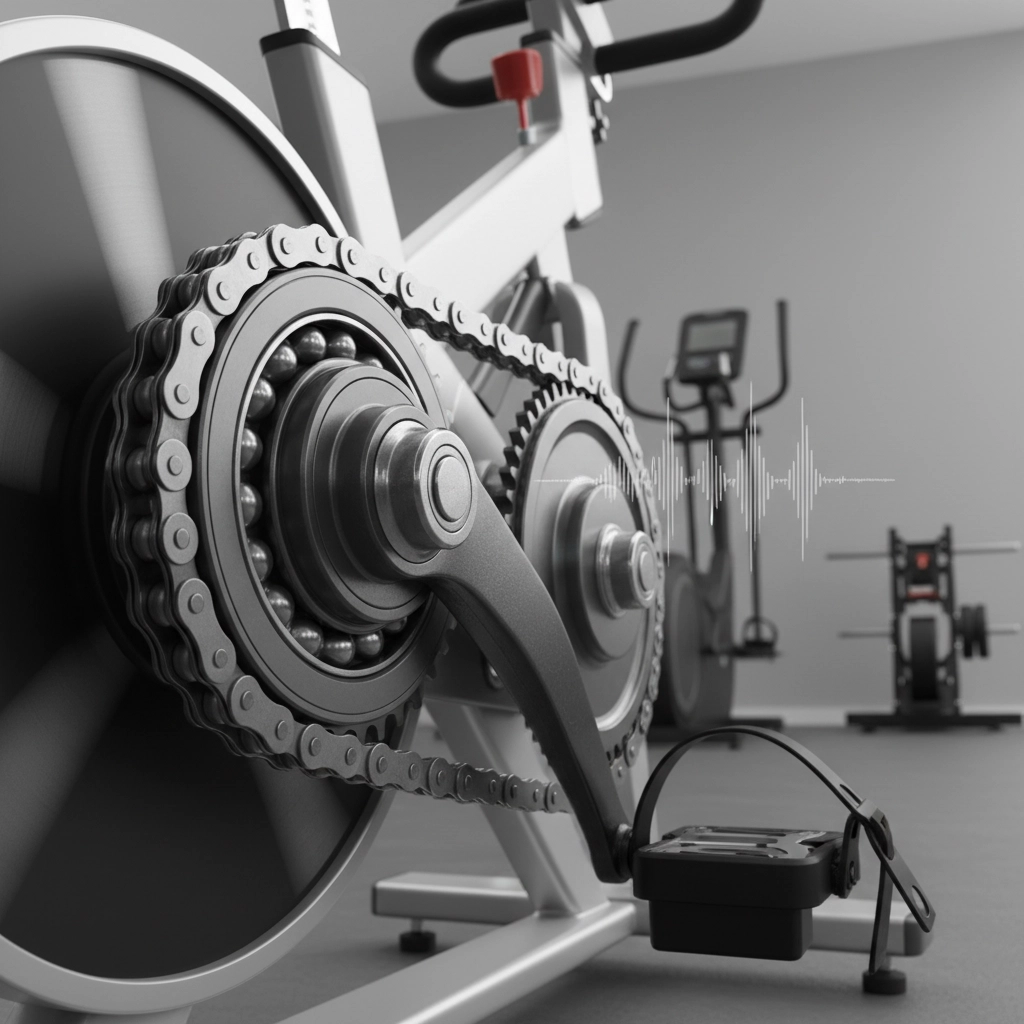
- Chain drives requiring lubrication
- Handlebar adjustment points
- Resistance knob mechanisms
Unlike grinding, squeaking is usually less severe, but don’t ignore it. What starts as an annoying squeak can progress to serious mechanical problems if left untreated. The good news? This is often the easiest sound to fix with proper maintenance.
The fix: Regular lubrication of appropriate components usually eliminates squeaking completely. However, if lubrication doesn’t solve the problem within a few uses, you may have worn components that need replacement.
3. The Clicking and Ticking: Decoding Normal vs. Abnormal
This is where things get tricky. Exercise bikes naturally produce some clicking and ticking sounds during operation, and you need to know which ones are normal versus which ones spell trouble.
Normal clicking sounds:
- A faint “tick” once per flywheel revolution (often disappears with use)
- Light clicking when coasting that mimics a bicycle’s freehub bearing
- Soft rhythmic sounds that match your pedaling cadence
Abnormal clicking sounds:
- Loud, irregular clicking that doesn’t follow your pedaling rhythm
- Sharp clicks accompanied by resistance changes
- Clicking that gets progressively louder over time
- Multiple clicks per pedal revolution
The key difference? Normal operational sounds are consistent, quiet, and predictable. Warning sounds are erratic, loud, or progressively getting worse.
4. The Beeping Sound: System Communication or Malfunction
Modern exercise bikes are sophisticated machines with electronic control systems, and beeping is how they communicate with you. But not all beeps are created equal.
Normal beeping:
- Light beeping when pedaling very slowly (control system frequency)
- Soft electronic sounds during startup or shutdown
- Quiet beeps associated with button presses or program changes
Warning beeps:
- Loud, persistent beeping not associated with user input
- Beeping accompanied by error codes on the display
- Beeping that occurs during normal operation intensity
- Rapid or frantic beeping patterns
If your bike starts beeping loudly during regular use, especially if accompanied by display messages, it’s likely detecting a system malfunction. This could be anything from sensor issues to motor problems to electronic control failures.
5. The Banging and Knocking: Stop Everything Now
If your exercise bike sounds like someone’s throwing rocks in a tumbler, stop using it immediately. Loud banging, knocking, or violent mechanical sounds are never normal and indicate serious structural or mechanical problems.
What banging sounds indicate:
- Loose bolts in critical connection points
- Severely misaligned components
- Damaged internal parts
- Flywheel imbalance or damage
- Frame stress or cracking
These sounds often accompany visible signs of trouble like wobbling during use, unusual vibrations, or the bike physically moving during pedaling. Continued use isn’t just risking equipment damage: it’s potentially dangerous.
Safety first: Any equipment making banging or knocking sounds should be taken out of service immediately until professionally inspected and repaired.
Beyond the Big Five: Other Warning Signs
While these five sounds cover the most common warnings, your exercise bike might also produce creaking, clanking, or unusual whooshing noises that indicate general wear and tear. These sounds often accompany physical signs like:
- Visible cracks in the frame or components
- Worn pedals or loose connections
- Resistance that feels inconsistent or jerky
- Unusual vibrations during use
When DIY Isn’t Enough: Recognizing Professional Repair Needs
Some noise issues can be resolved with basic maintenance: tightening bolts, cleaning components, and applying appropriate lubrication. But when basic troubleshooting doesn’t eliminate the problem, or when you’re dealing with grinding, banging, or persistent electronic beeping, it’s time to call in the experts.
Professional fitness equipment technicians have the specialized tools, replacement parts, and expertise to diagnose complex problems safely. They can also perform comprehensive maintenance that prevents future issues, ultimately saving you money and extending your equipment’s lifespan.
Protecting Your Investment
Your exercise bike represents a significant investment in your health and fitness. Those warning sounds are actually your equipment’s way of helping you protect that investment. By listening to what your bike is telling you and responding appropriately, you can:
- Prevent minor issues from becoming major repairs
- Extend your equipment’s operational lifespan
- Maintain safe workout conditions
- Keep your fitness routine on track without interruptions
Remember, fitness equipment that’s properly maintained not only lasts longer: it performs better, providing you with more effective workouts and better results.
The next time your exercise bike starts talking to you through unusual sounds, don’t ignore the conversation. Your machine is trying to help you keep it running smoothly for years to come. Whether you need a simple lubrication session or professional diagnostic services, addressing these warning sounds promptly will keep you pedaling toward your fitness goals safely and effectively.
If you’re hearing any of these warning sounds and need professional assessment or repair, contact our experienced team for expert fitness equipment maintenance and repair services.
 Heartbeat Fitness Repair
Leave a comment