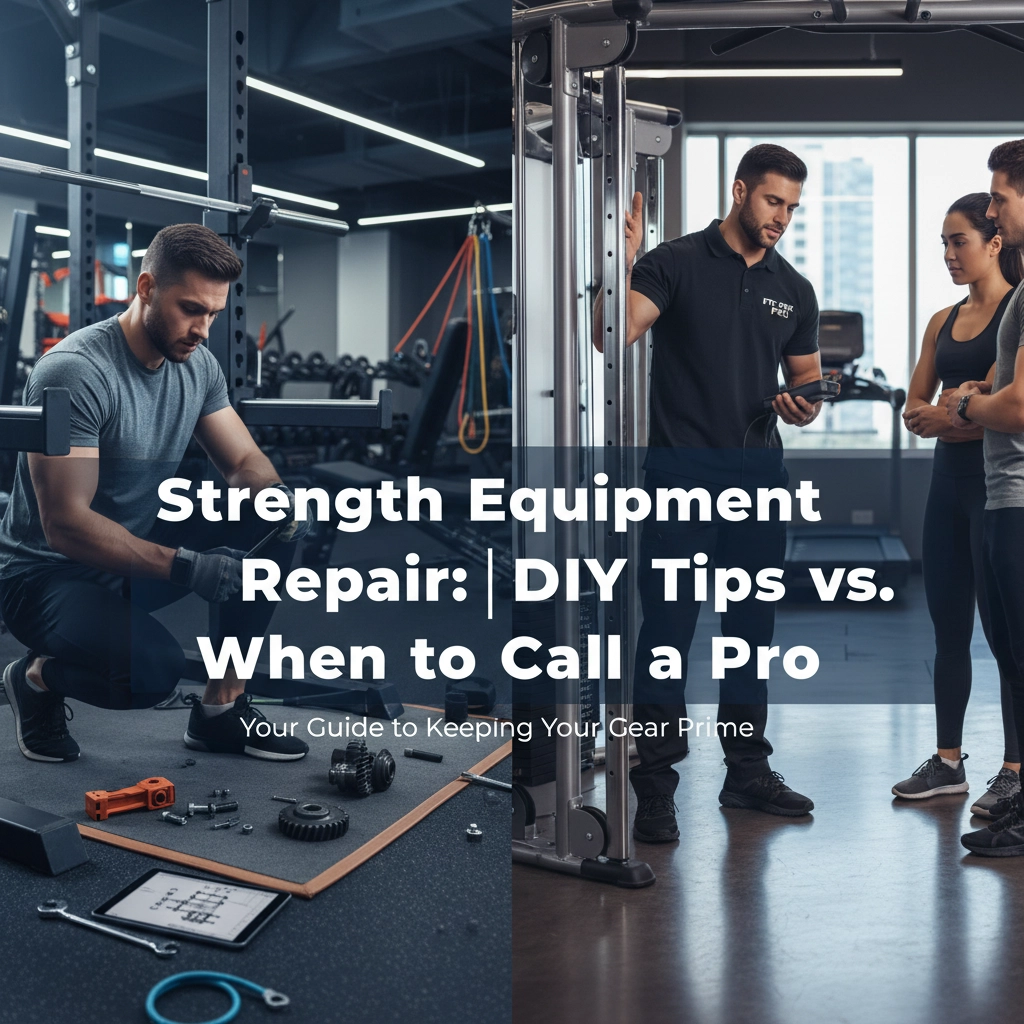
Your home gym is your sanctuary – that space where you push limits, build strength, and chase your fitness goals. But what happens when your trusty strength equipment starts acting up? That squeaky bench press, the sticky cable machine, or the wobbly squat rack can turn your workout paradise into a frustration zone.
Here’s the million-dollar question: should you grab your toolbox and dive into some DIY strength equipment repair, or is it time to call in the pros? As someone who’s seen it all in the gym equipment repair world, I’m here to help you make that call with confidence.
The DIY-Friendly Fixes You Can Handle
Let’s start with the good news – there are plenty of strength equipment issues you can tackle yourself with basic tools and a bit of know-how. These fixes will save you money and get you back to lifting faster.
Cable and Pulley System Maintenance
Cable machines are probably the most common strength equipment in both home and commercial gyms, and they’re also the most likely to need attention. If your cable feels sticky or jerky during movements, don’t panic – this is often an easy fix.
First, check that your cables are properly seated on the pulleys. You’d be surprised how often cables slip off their intended path and start grinding against the frame instead of running smoothly through the pulley system. This creates that horrible grinding sensation and can damage your equipment if left unchecked.
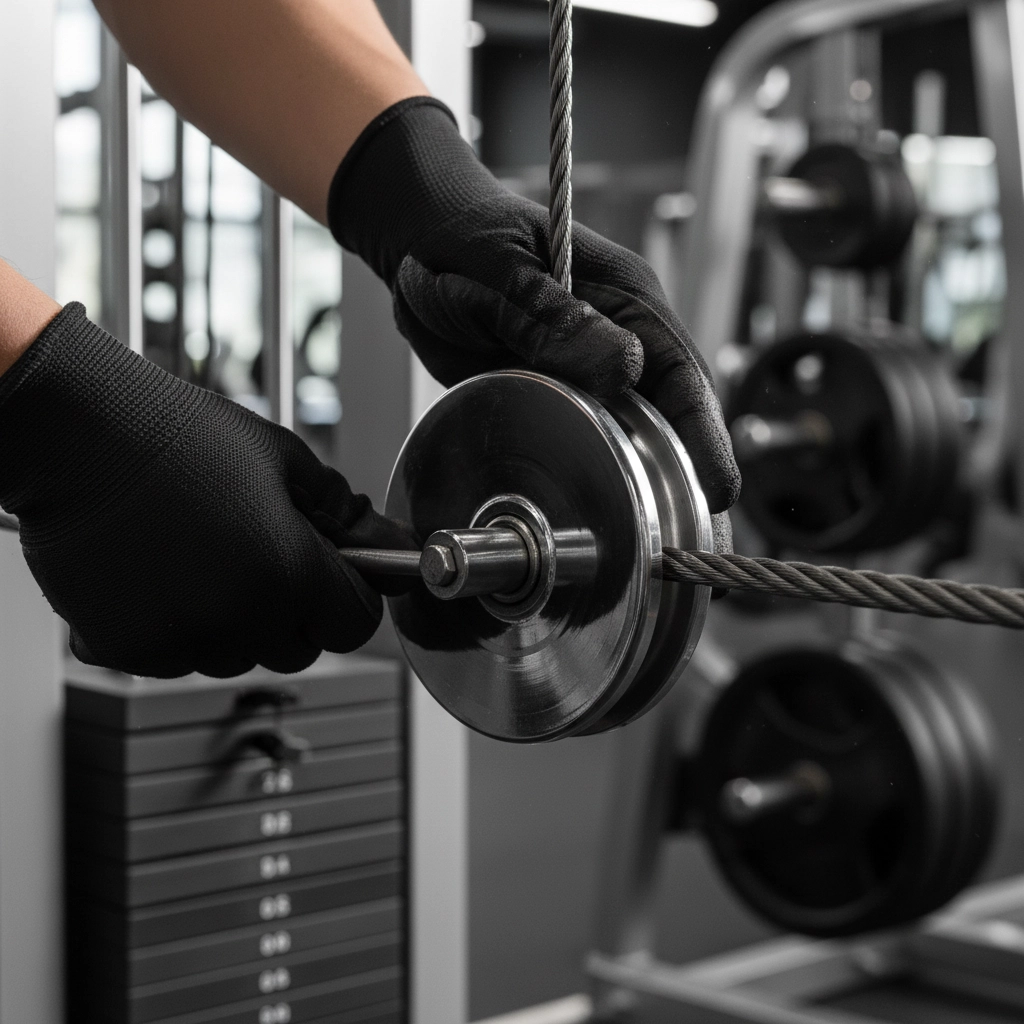
Here’s a pro tip: if you’ve got a brand new machine and the cables feel stiff, they might just need to relax. Lay the cables flat on the ground with weights on both ends and let them sit for 24 hours. This straightens out any kinks or bends from packaging and installation.
Guide Rod TLC
Those shiny chrome guide rods on your weight machines need regular attention to keep performing smoothly. Wipe away dirt, sweat, and grime buildup with a clean cloth, then apply a small amount of silicone-based lubricant to contact surfaces.
While you’re at it, inspect for any peeling chrome or small divots. These might seem minor, but they can cause serious problems down the road if moisture gets underneath and starts the rusting process.
Hardware Checks (The Boring but Important Stuff)
I know, I know – checking bolts isn’t exactly thrilling. But loose hardware is one of the leading causes of strength equipment failure, and it’s completely preventable with regular attention.
Make it a monthly habit to walk around your equipment with a wrench set. Check that nuts and bolts are properly tightened, but don’t go crazy with the torque – overtightening can strip threads or crack components. If you find hardware that’s constantly loosening, consider using thread locker or replacing it entirely.
Cable Inspections and Adjustments
Your cables work hard, so they deserve regular inspections. Look for:
- Secure cable end attachments
- Properly secured pins and connections
- Cracking or wear in cable coating
- Frayed strands (a serious safety concern)
- Proper tension throughout the system
Most cable tension adjustments can be made with basic tools, and replacement cables are readily available for most equipment brands.
When It’s Time to Call a Professional
Now, let’s talk about when you should step back and let the experts handle your gym equipment repair needs. Trust me, knowing these boundaries can save you from turning a simple fix into an expensive disaster.
Safety-Critical Repairs
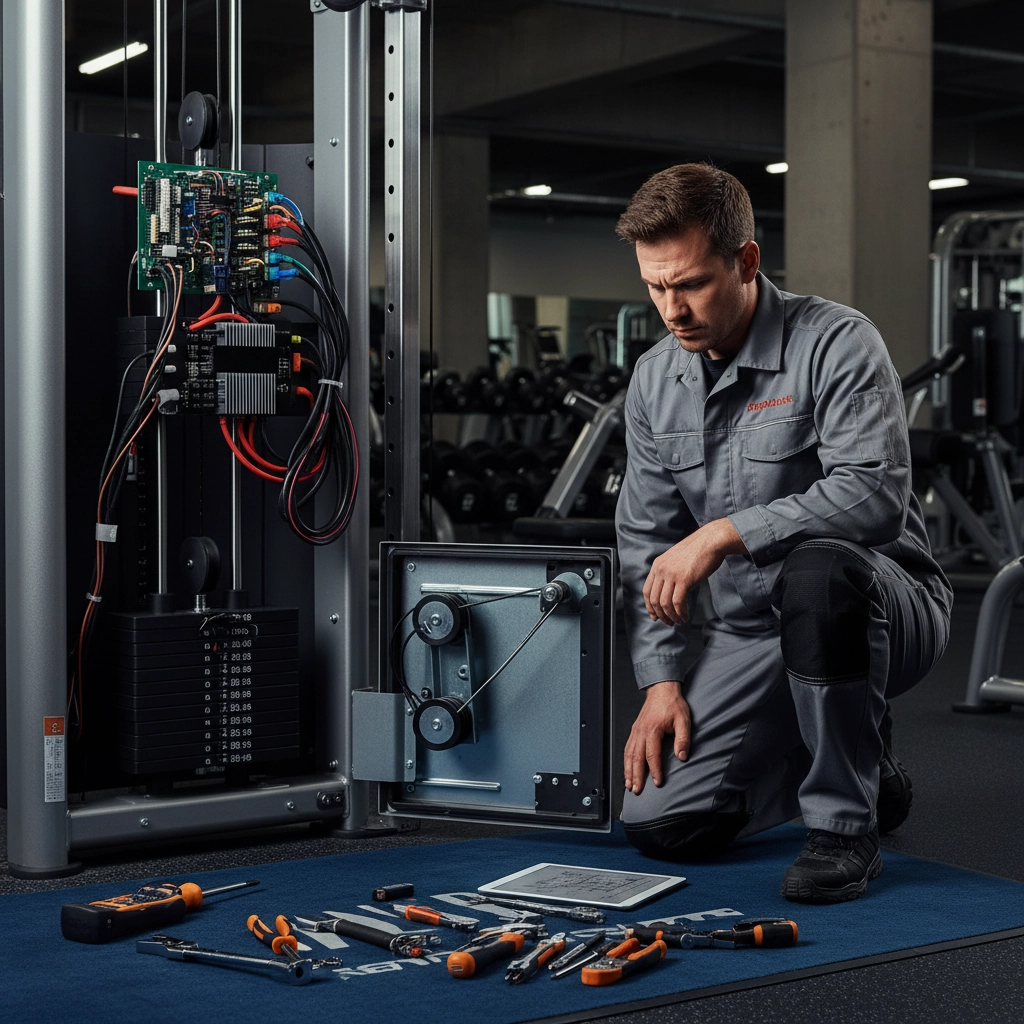
If your repair involves anything that could put you or others at risk, it’s professional territory. This includes:
- Structural frame damage or welding repairs
- Weight stack cables that support heavy loads
- Any repair involving moving parts that could cause injury if they fail
- Electrical components on motorized equipment
Your safety is worth more than the cost of professional service, every single time.
Complex Mechanical and Electronic Issues
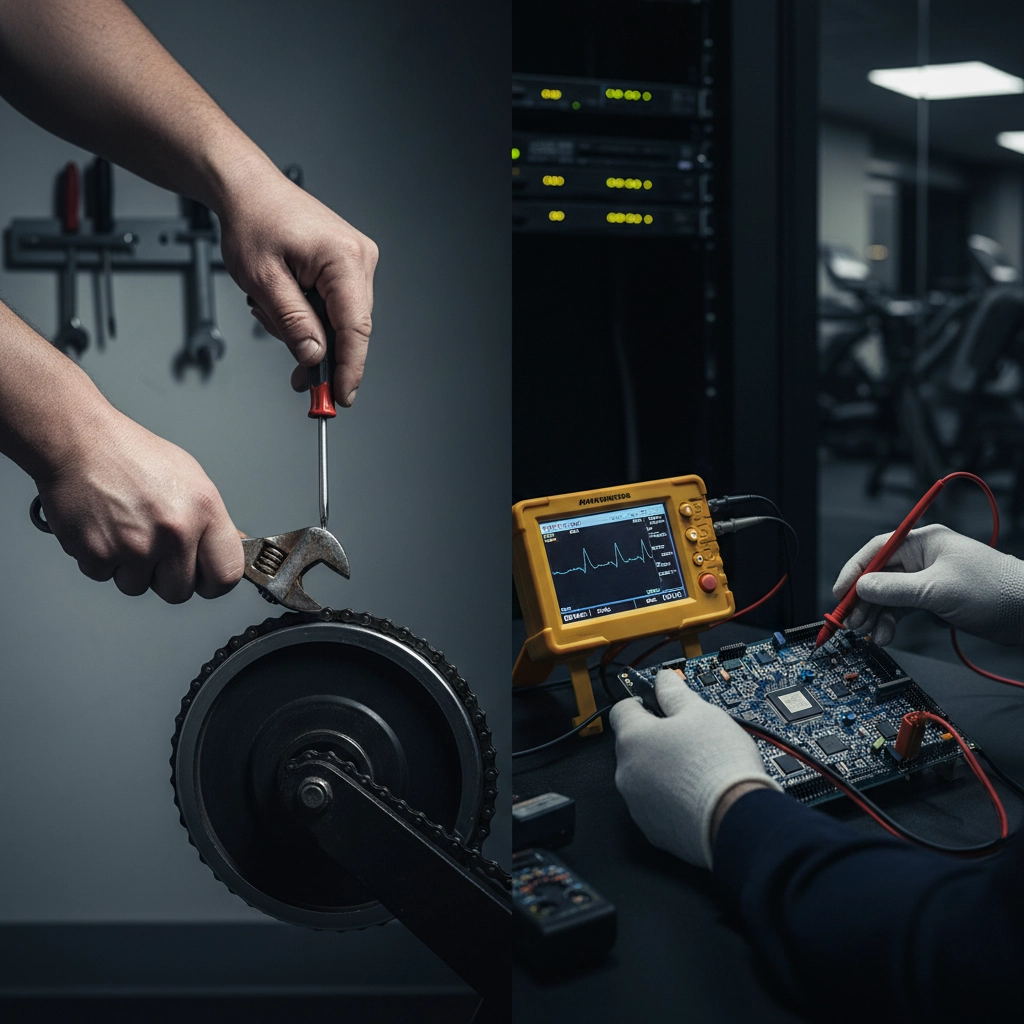
Modern strength equipment isn’t just iron and steel anymore. Today’s machines feature sophisticated sensors, electronic displays, programmable resistance, and complex mechanical systems that require specialized knowledge to diagnose and repair properly.
If your equipment has electronic components, error codes, or computerized functions that aren’t working, you’re likely looking at a job that requires diagnostic equipment and technical expertise beyond typical DIY capabilities.
Warranty Considerations
Before you grab that screwdriver, check your warranty status. Many manufacturers void warranties if unauthorized repairs are attempted, even if you don’t cause additional damage. For newer equipment, professional service through authorized repair centers protects your investment and maintains your warranty coverage.
Specialized Tool Requirements
Some strength equipment repairs require specialized tools, calibration equipment, or proprietary parts that aren’t available to consumers. Professional repair services have access to manufacturer-specific tools and can perform precision adjustments that ensure your equipment operates safely and efficiently.
The Decision-Making Framework
So how do you decide which category your repair falls into? Here’s a practical approach:
Start with an honest skill assessment. Are you comfortable working with tools? Do you have experience with similar repairs? Can you follow technical diagrams and instructions? If you’re unsure, lean toward professional help.
Consider the equipment value and age. High-end, newer equipment deserves professional attention to maintain its value and functionality. Older, less expensive equipment might be worth a DIY attempt if the worst-case scenario is replacement rather than expensive professional repair.
Evaluate the downtime cost. If this is your primary workout equipment or you’re operating a commercial facility, factor in the cost of extended downtime if a DIY repair goes wrong. Sometimes paying for professional service gets you back up and running faster, making it the economical choice despite higher upfront costs.
Cost Considerations That Matter
Let’s be real – cost plays a major role in repair decisions. DIY repairs typically cost just the price of parts and your time, while professional service includes labor charges that can add up quickly.
However, consider the total cost of ownership. A botched DIY repair can turn a simple fix into a major overhaul or even require complete equipment replacement. Professional repairs often come with warranties on both parts and labor, providing peace of mind and protection against future issues.
For commercial facilities, factor in liability considerations. Professional repairs typically include proper documentation and compliance with safety standards that protect you from potential liability issues.
Building Your DIY Confidence Safely
If you’re interested in handling more of your own strength equipment repair, start small and build your skills gradually. Begin with basic maintenance tasks like cleaning, lubrication, and hardware checks before moving on to more complex repairs.
Keep detailed records of your maintenance activities, including dates, observations, and any parts replaced. This documentation helps identify patterns and can be valuable information for professional technicians if major repairs become necessary.
Invest in quality basic tools and keep them organized and readily available. A good set of metric and standard wrenches, screwdrivers, and lubricants will handle most routine maintenance tasks.
The Bottom Line on Strength Equipment Repair
The key to successful strength equipment repair – whether DIY or professional – is making informed decisions based on safety, complexity, and your personal capabilities. There’s no shame in calling for professional help when a repair exceeds your comfort zone or skill level.
At HeartBeat Fitness Repair, we’ve seen everything from simple fixes that could have been handled at home to complex repairs that definitely required professional expertise. Our goal is always to get your equipment running safely and efficiently, whether that means walking you through a DIY fix or providing professional service.
Remember, your strength equipment is an investment in your health and fitness goals. Taking care of it properly – with the right balance of DIY maintenance and professional service – ensures it keeps supporting your journey for years to come.
Ready to get your strength equipment back in peak condition? Whether you need guidance on a DIY repair or professional service, we’re here to help. Contact us today to discuss your specific situation and find the best solution for your needs.

 Heartbeat Fitness Repair
Leave a comment