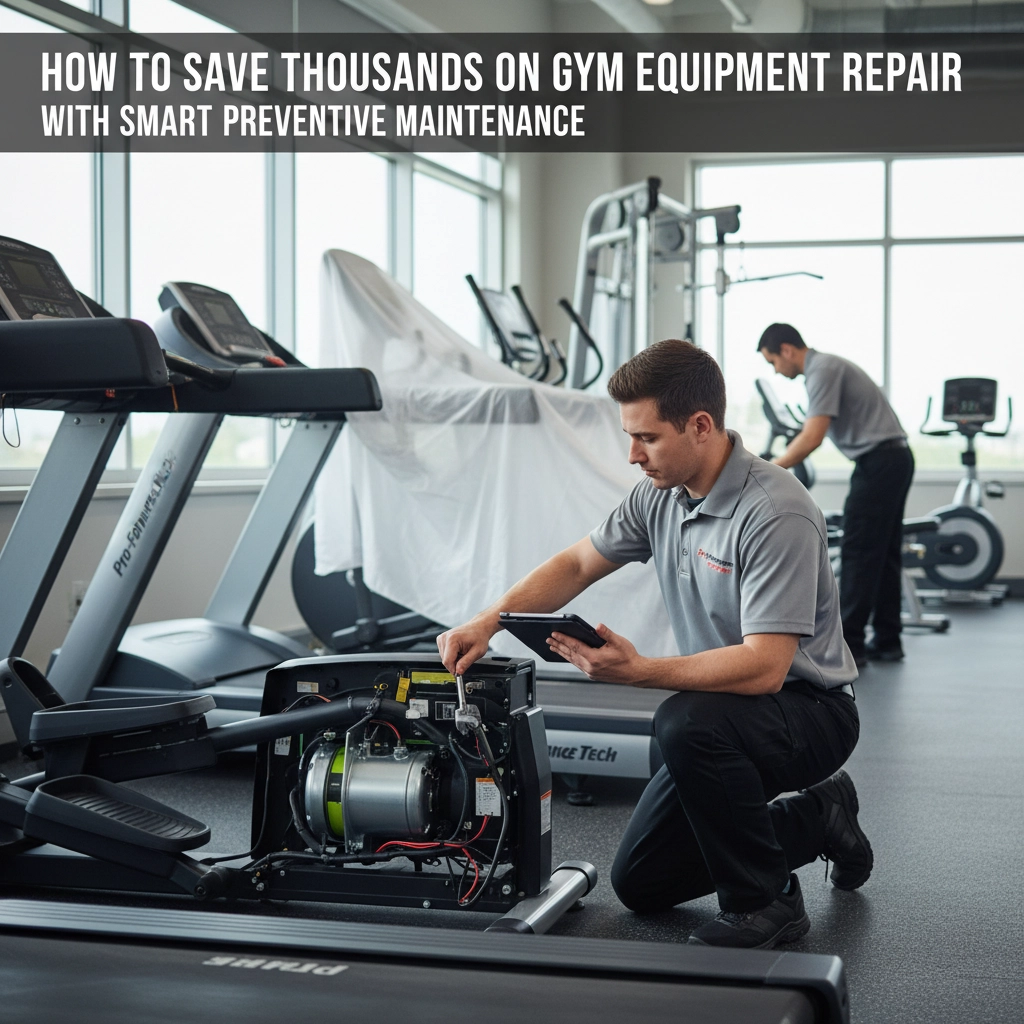
Picture this: You walk into your gym Monday morning, and three of your most popular treadmills are down. Your members are frustrated, your revenue is taking a hit, and you’re looking at a repair bill that could easily reach $3,000 or more. Sound familiar?
Here’s the thing: most gym owners don’t realize they’re sitting on a goldmine of savings. With the right preventive maintenance strategy, you could slash your repair costs by up to 40% while extending your equipment’s lifespan by years. That’s not just saving money; that’s transforming your entire business model.
The Hidden Cost of “Fix It When It Breaks”
Most gym owners operate on what I call the “reactive repair mentality.” Equipment breaks, you call for service, you pay the bill, and repeat. But here’s what that approach is really costing you:
A well-maintained treadmill can run smoothly for 10-12 years. A neglected one? You’ll be lucky to get five years out of it. That means you’re essentially doubling your equipment replacement costs just by skipping regular maintenance.
But the real kicker isn’t just the equipment cost: it’s everything else that comes with it. Member complaints, lost revenue from downtime, emergency service call fees, and the stress of constantly putting out fires instead of growing your business.
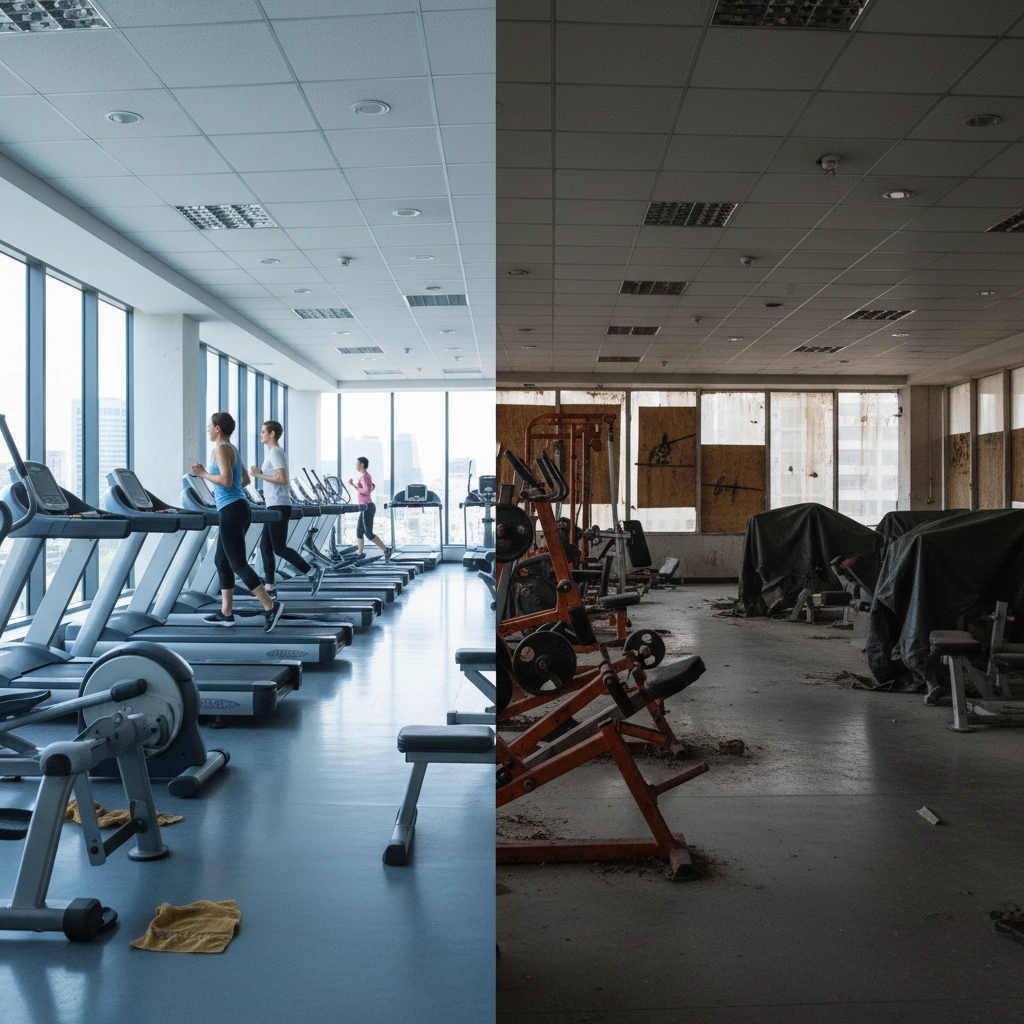
The Smart Approach: Preventive Maintenance That Actually Works
Think of preventive maintenance like going to the gym yourself. You wouldn’t wait until you’re completely out of shape to start exercising, right? The same principle applies to your equipment. Small, consistent actions compound into massive results over time.
Daily Maintenance: The 10-Minute Game Changer
Every piece of equipment in your gym needs daily attention, but we’re not talking about hours of work. Here’s what your staff should be doing every single day:
Equipment Wipedown and Inspection: Go beyond just cleaning for hygiene. While wiping down each machine, train your team to look for loose bolts, frayed cables, unusual wear patterns, or anything that just doesn’t look right. Most major failures give warning signs days or even weeks before they happen.
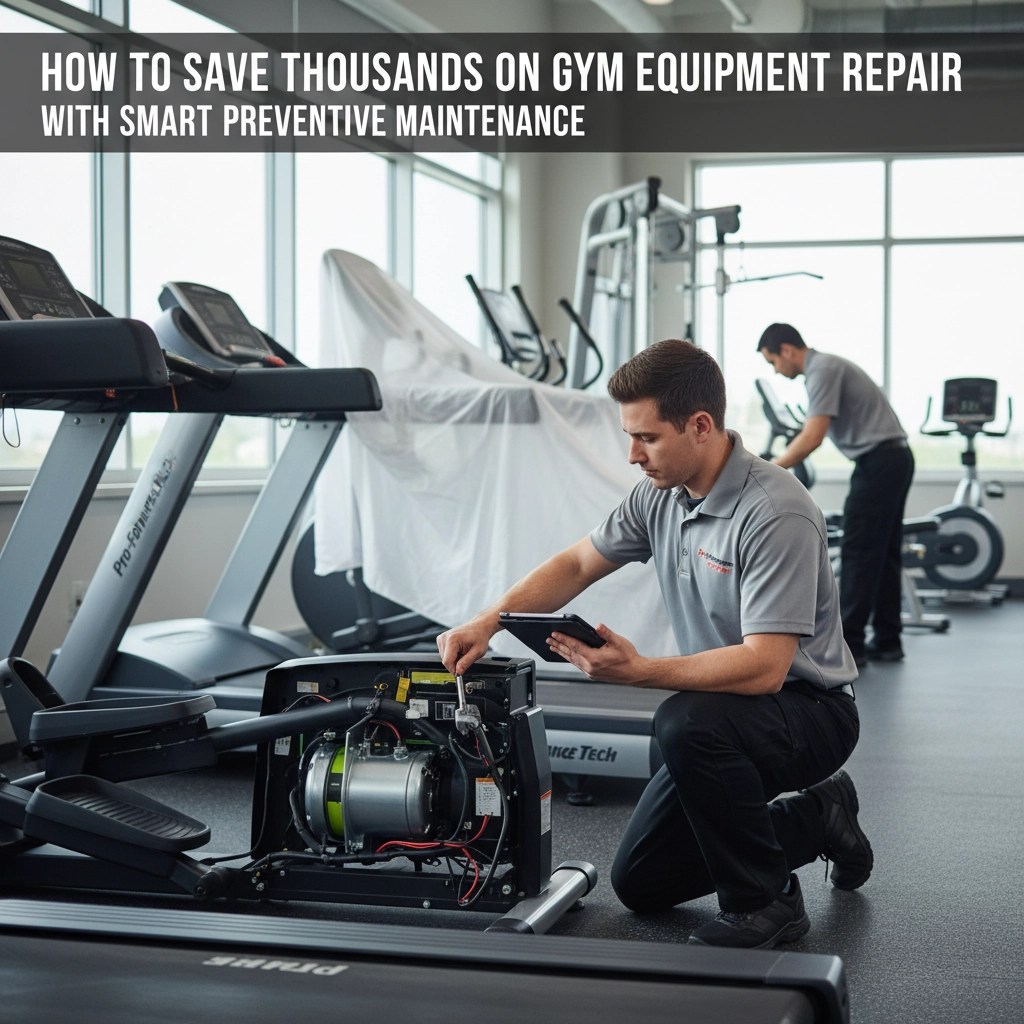
Belt and Moving Parts Check: Treadmill belts should be centered and smooth. Elliptical pedals shouldn’t wobble. Cable machines should move freely without grinding or catching. These quick checks take seconds but can prevent thousands in damage.
Display and Electronics Test: Modern gym equipment is basically a computer with moving parts attached. Make sure displays are working, programs are loading correctly, and heart rate monitors are responding. Software glitches often precede hardware failures.
Weekly Deep-Dive Maintenance
Once a week, designate time for more thorough maintenance tasks:
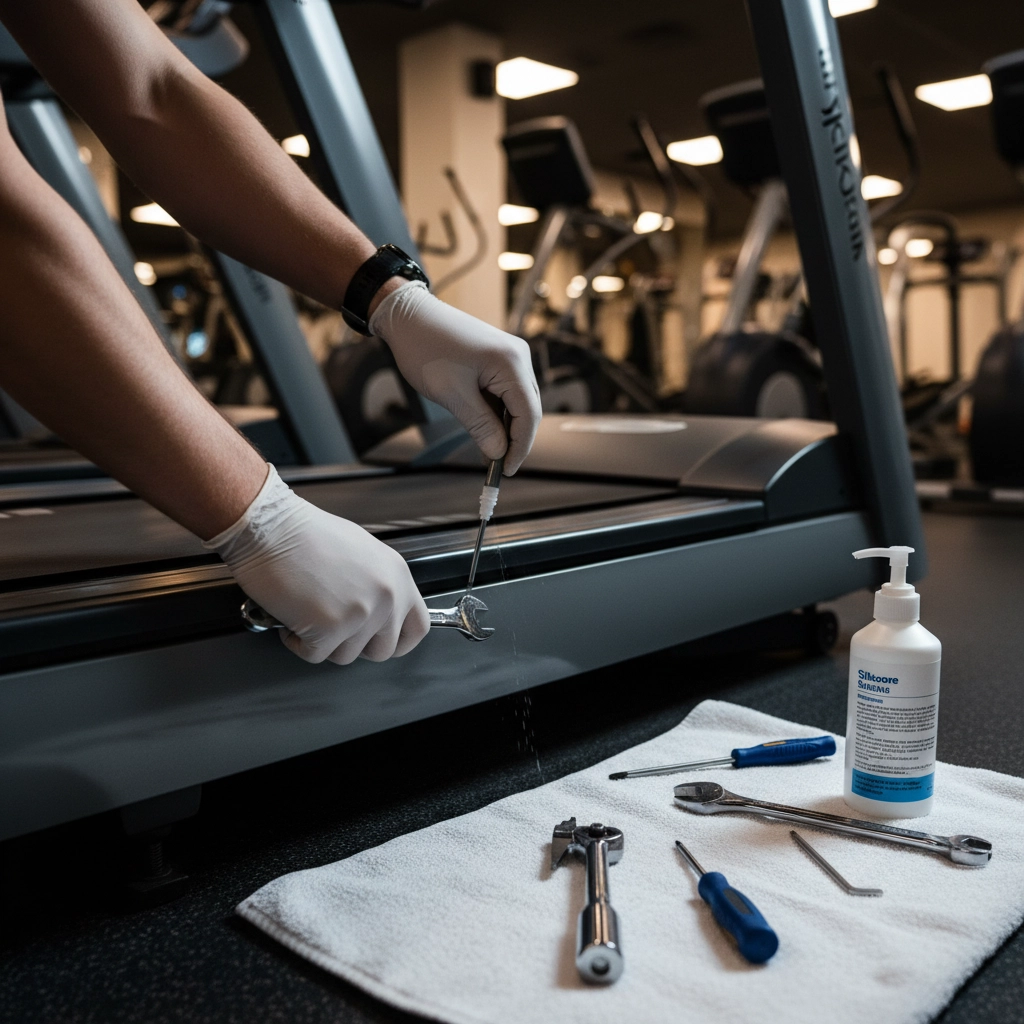
Lubrication Schedule: Different machines need different lubrication schedules, but most treadmills need belt lubrication every 3-6 months depending on usage. Mark your calendar and stick to it. A $15 bottle of lubricant can prevent a $500 motor replacement.
Calibration Checks: Weights should feel accurate, incline settings should match actual angles, and speed settings should be precise. Members notice when something feels off, even if they can’t articulate what it is.
Deep Cleaning: Weekly deep cleans aren’t just about appearance: they’re about preventing buildup of dust, sweat, and debris that can cause mechanical issues. Pay special attention to ventilation areas and electronic components.
Monthly Maintenance: The Professional Touch
Some maintenance tasks require more expertise and should be done monthly:
Belt Tension and Alignment: Improperly tensioned treadmill belts are one of the leading causes of motor burnout. Too loose, and the motor works harder than it should. Too tight, and you’re putting unnecessary stress on bearings and pulleys.
Cable and Pulley Inspection: Weight machines put tremendous stress on cables and pulleys. A snapped cable isn’t just expensive to replace: it’s a serious safety hazard. Monthly inspections can catch wear before it becomes dangerous.
Electronic System Updates: Just like your smartphone, gym equipment often needs software updates. These updates don’t just add features; they fix bugs that could lead to mechanical problems.
Annual Professional Inspections: Your Insurance Policy
Here’s where many gym owners make a crucial mistake: they think they can handle everything in-house. While daily and weekly maintenance can absolutely be done by your staff, annual professional inspections are non-negotiable.
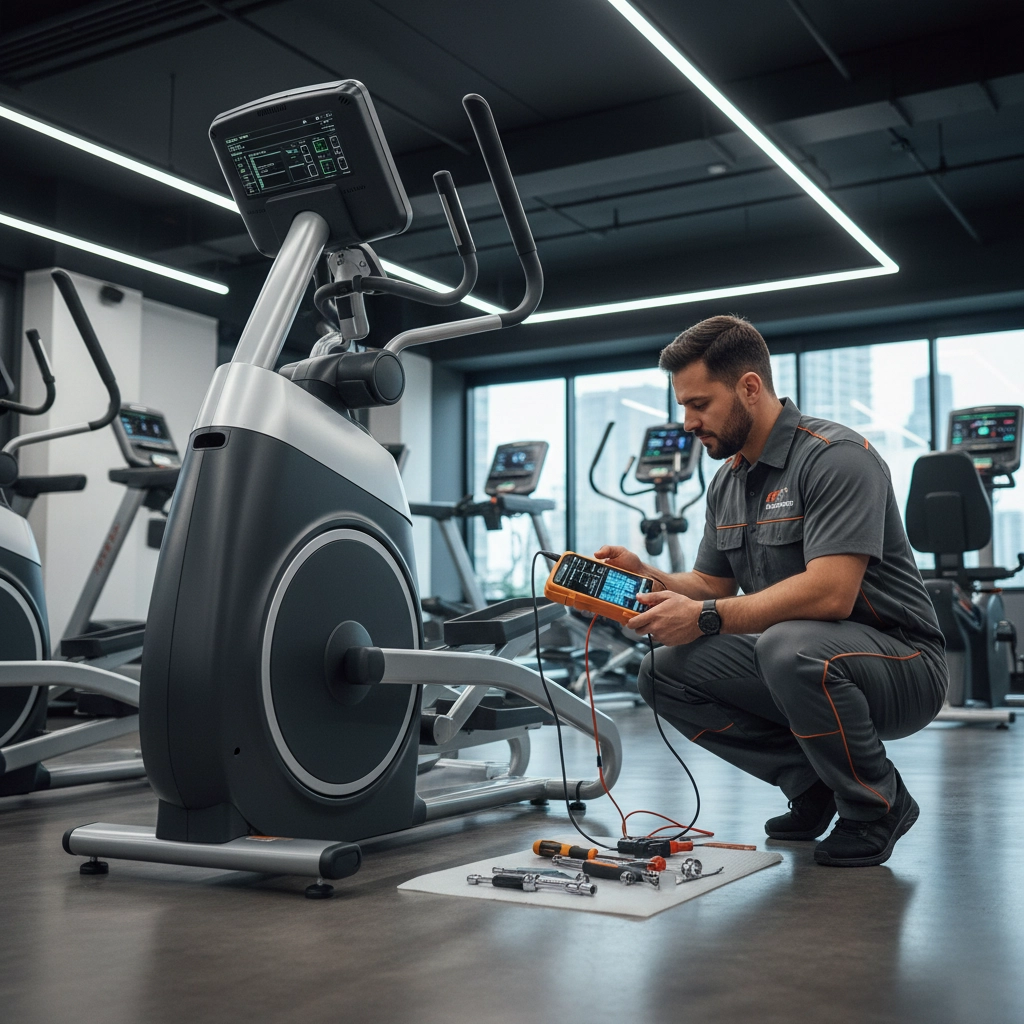
A qualified technician will catch things your staff simply can’t see. They have specialized tools to measure motor performance, test electrical systems, and identify wear patterns that predict future failures. Think of it as a physical for your equipment.
Common Mistakes That Cost Thousands
After years in the fitness equipment repair business, I’ve seen the same costly mistakes over and over again:
Using the Wrong Lubricants: Not all lubricants are created equal. Using automotive oil on a treadmill belt or WD-40 where you need specialized silicone lubricant can actually cause more damage than no lubrication at all.
Ignoring Manufacturer Guidelines: Every piece of equipment comes with specific maintenance requirements. Ignoring these isn’t just voiding your warranty: it’s accelerating wear and inviting expensive failures.
Undertrained Staff: Your front desk person shouldn’t be performing maintenance on a $5,000 elliptical. Invest in proper training or hire qualified maintenance staff. The cost of training is always less than the cost of equipment damage.
Inconsistent Scheduling: Maintenance only works if it’s consistent. Create detailed schedules, assign responsibilities, and track completion. What gets scheduled gets done.
The Real ROI of Preventive Maintenance
Let’s talk numbers, because that’s what really matters to your bottom line:
A gym in St. Louis implemented a comprehensive preventive maintenance program and saw a 40% reduction in repair costs over three years. But the savings went beyond just repair bills:
- Equipment downtime decreased by 60%
- Member satisfaction scores increased
- Equipment replacement cycles extended by an average of 3 years
- Insurance premiums decreased due to improved safety record

For a typical mid-size gym with 50 pieces of cardio equipment, this translates to savings of $15,000-$25,000 annually. That’s real money that goes straight to your profit margin.
Creating Your Maintenance Culture
The most successful gyms don’t just do maintenance: they build a culture around it. Make equipment care part of your brand identity. Train every team member to see themselves as guardians of the member experience.
Create maintenance checklists that are easy to follow and hard to skip. Use technology to your advantage: apps that remind staff of scheduled tasks, systems that track completion, and data that shows the impact of your efforts.
Most importantly, celebrate the wins. When your preventive maintenance catches a problem before it becomes a failure, make sure your team knows they saved the day. When you hit milestones for equipment uptime, acknowledge the effort it took to get there.
Your Next Steps
Preventive maintenance isn’t just about avoiding problems: it’s about creating a competitive advantage. While your competitors are dealing with broken equipment and frustrated members, you’ll be running a smooth operation that keeps people coming back.
Start small if you need to, but start today. Pick your five most critical pieces of equipment and implement a basic daily inspection routine. Build from there as you see the results.
Remember, every day you wait is money walking out the door. Your equipment is either appreciating in value through proper care, or depreciating through neglect. The choice is yours, but the math is undeniable.
The question isn’t whether you can afford to implement preventive maintenance: it’s whether you can afford not to. Your future self (and your bank account) will thank you.
Ready to transform your gym’s maintenance approach? Contact our team to create a customized preventive maintenance plan that fits your facility and budget. Because your equipment: and your business( deserves better than just hoping nothing breaks.)
 Heartbeat Fitness Repair
Leave a comment