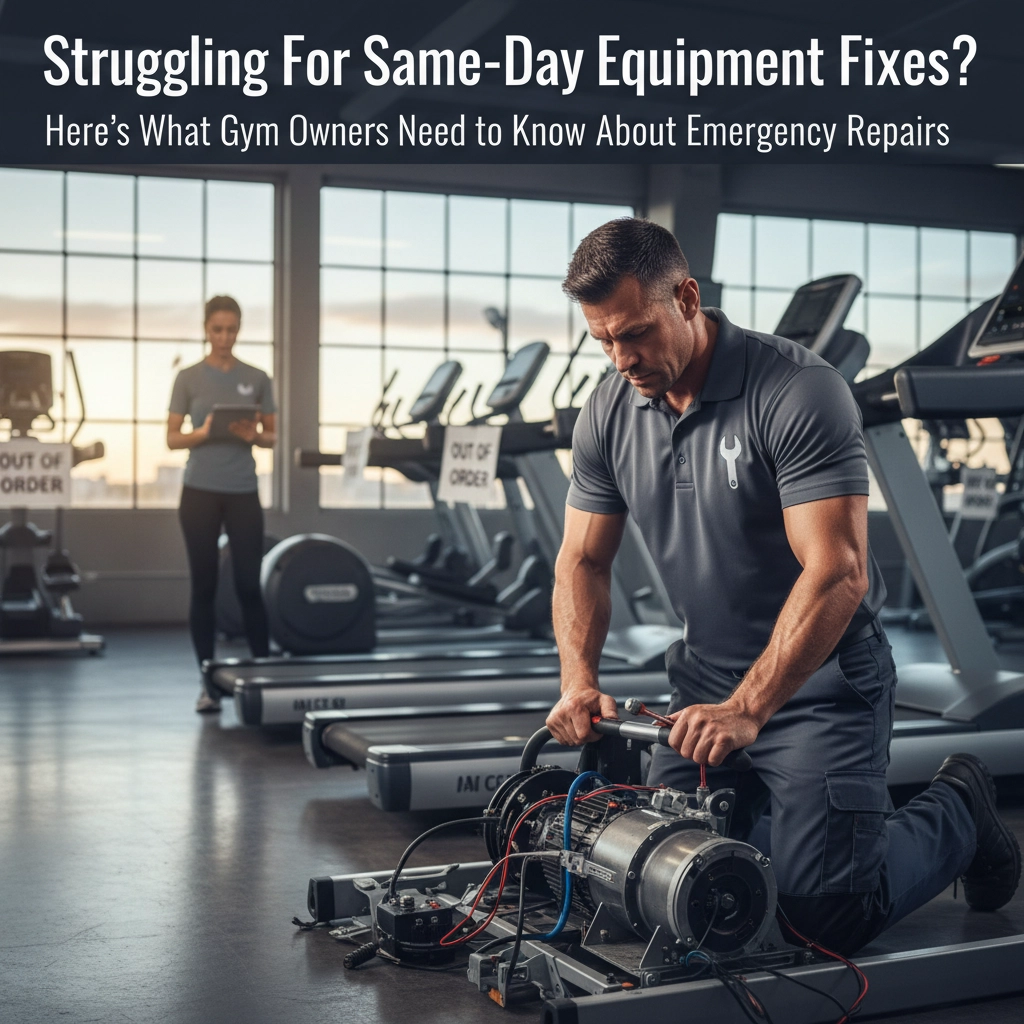
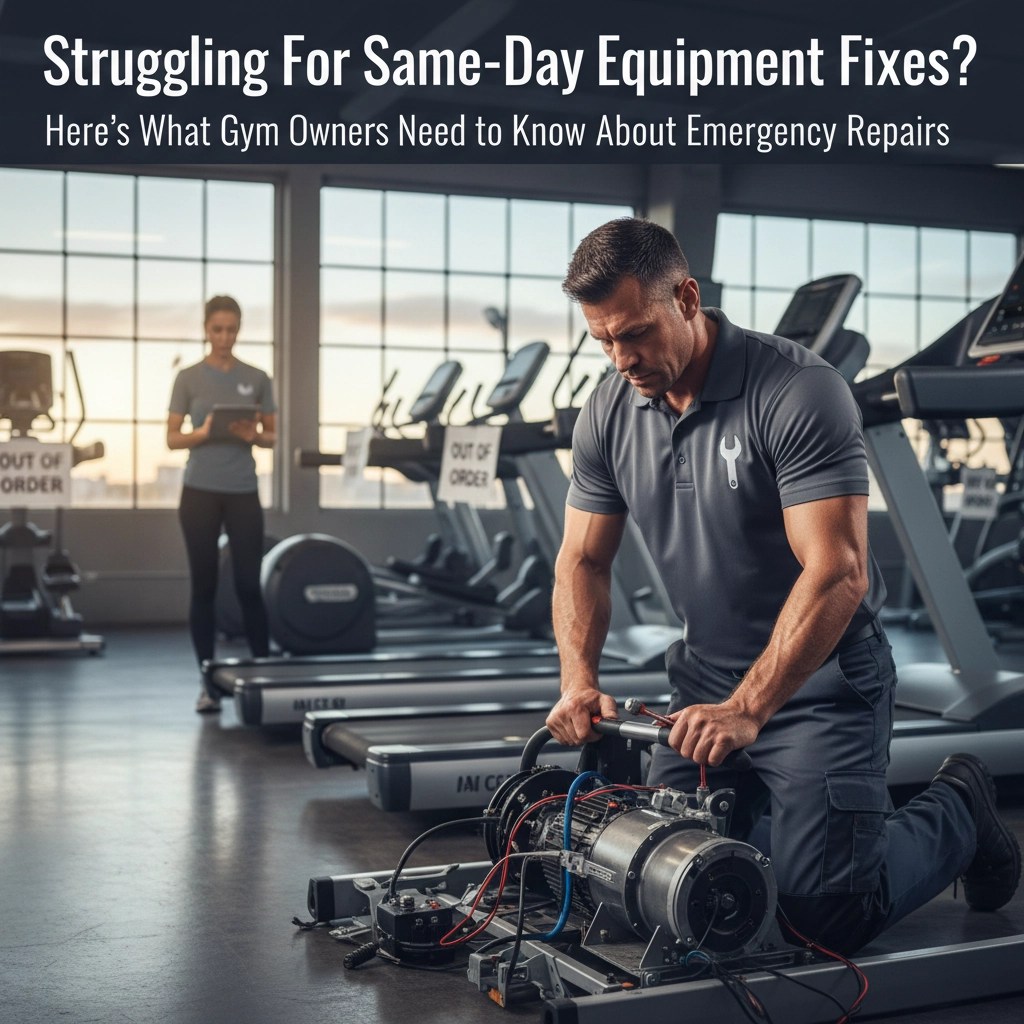
Picture this: It’s Monday morning, your busiest day of the week, and your most popular treadmill just died. Not a slow decline: completely dead. Your members are already lining up, coffee in hand, ready for their morning cardio routine. Now what?
If you’ve been in the gym business for any length of time, you know this scenario isn’t just possible: it’s inevitable. Equipment breakdowns don’t follow your schedule, and they certainly don’t care about your bottom line. But here’s the thing: how you handle these emergencies can make or break your gym’s reputation and profitability.
The Real Cost of Equipment Emergencies Goes Beyond the Repair Bill
When gym equipment fails unexpectedly, most owners focus on the immediate repair cost. But that’s just the tip of the iceberg. Emergency repairs force you into reactive mode, where every decision becomes more expensive and stressful.
First, there’s the premium pricing. Emergency repair services often charge 50-100% more than scheduled maintenance calls. Then you’re dealing with expedited shipping costs for replacement parts that could have been ordered ahead of time at regular rates. But the biggest hit? Lost revenue from downtime.
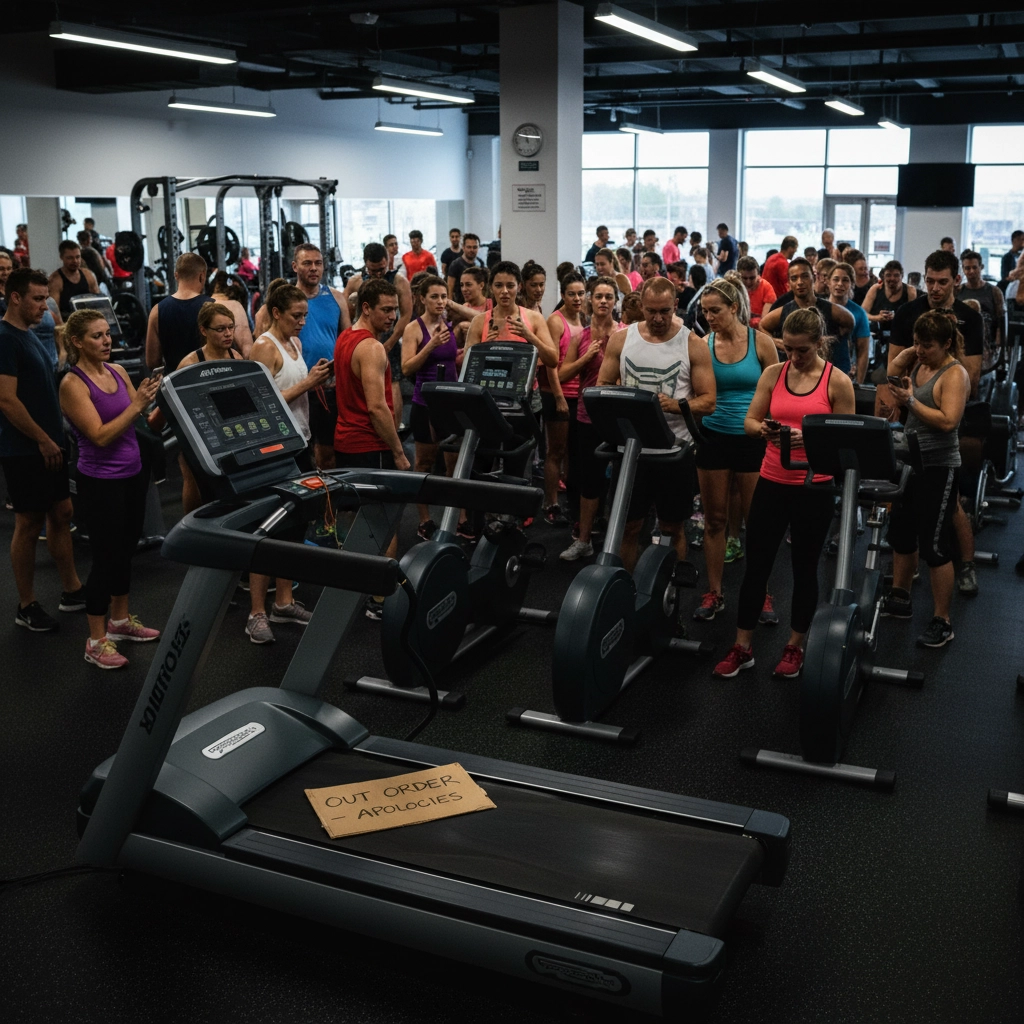
A broken treadmill during peak hours doesn’t just affect that one machine. It creates bottlenecks throughout your facility. Members get frustrated waiting for equipment, and some may cancel their sessions entirely. Worse yet, if this becomes a pattern, members start questioning whether your gym can meet their needs.
The ripple effects extend to your staff too. Your team spends time fielding complaints, rearranging schedules, and trying to manage member expectations instead of focusing on growth and service excellence. It’s a domino effect that touches every aspect of your operation.
What Separates Great Emergency Repair Services from the Rest
When you’re in crisis mode, not all repair services are created equal. The right emergency repair partner can turn a potential disaster into a minor hiccup, while the wrong choice can extend your downtime and multiply your losses.
Response Time is Everything
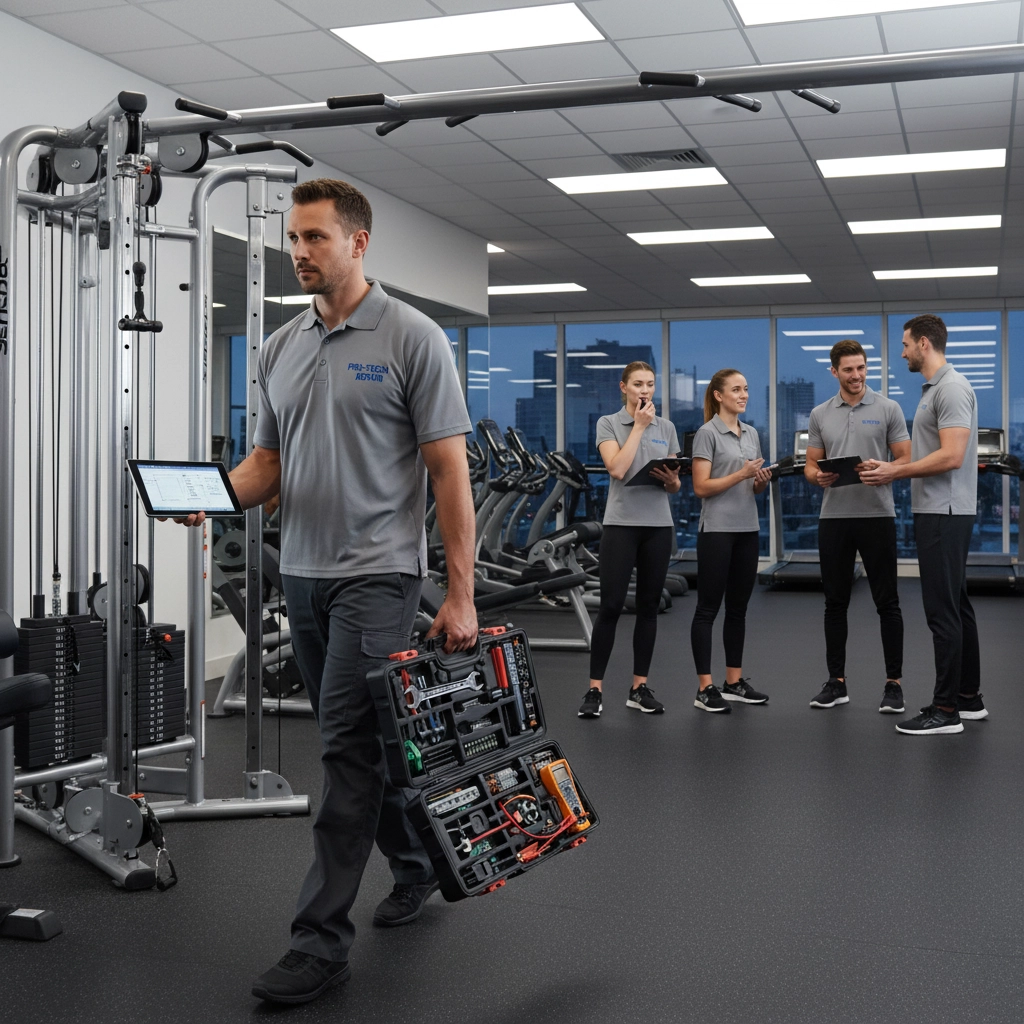
In commercial gyms, every hour of downtime translates to lost revenue and frustrated members. Look for services that guarantee response times, not just vague promises of “as soon as possible.” The best emergency repair companies have technicians strategically located to minimize travel time and can often be onsite within 2-4 hours of your call.
Certified Expertise Matters
Your expensive fitness equipment deserves more than a “handy person” with basic tools. Seek out certified technicians who understand the complex electronics, hydraulics, and mechanical systems in modern gym equipment. They should carry genuine manufacturer parts and have access to technical diagrams and repair protocols.
Warranty Protection
Emergency repairs should come with warranties. If the same issue recurs within 30-90 days, you shouldn’t pay twice. This warranty coverage also indicates the repair company’s confidence in their work quality.

Comprehensive Equipment Knowledge
Your repair service should handle everything from treadmills and ellipticals to complex strength training systems. Having to call multiple vendors during an emergency multiplies your stress and coordination challenges.
Prevention: Your First Line of Defense
While emergency repairs are sometimes unavoidable, the best strategy is preventing them from happening in the first place. Regular maintenance isn’t just about keeping equipment running: it’s about protecting your investment and maintaining member satisfaction.
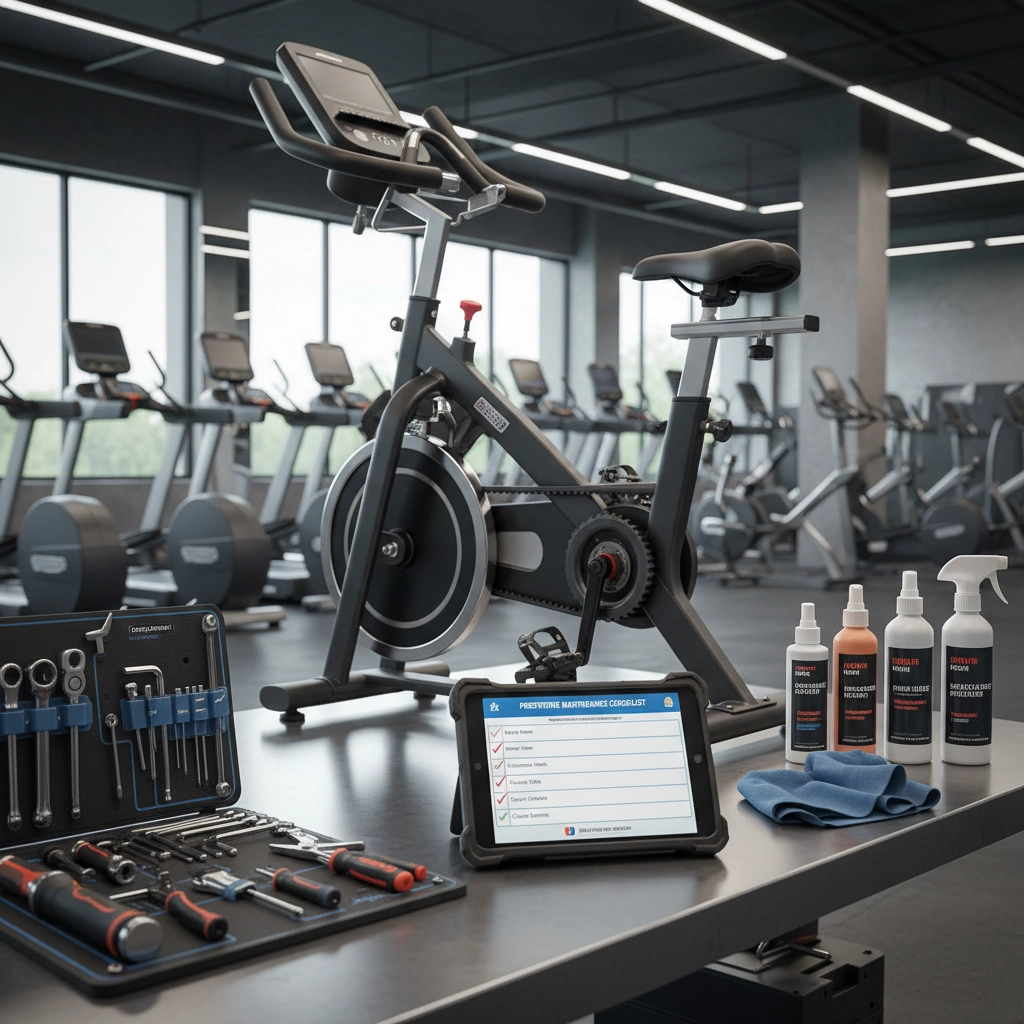
Equipment should receive basic cleaning and functionality checks weekly, with comprehensive maintenance every 3-6 months. High-use machines may need even more frequent attention. This isn’t just manufacturer recommendation: it’s smart business.
Think of it like car maintenance. You wouldn’t drive 50,000 miles without changing your oil, yet many gym owners run equipment for months without proper servicing. The result is predictable: small, fixable issues become major, expensive failures.
Regular maintenance also provides valuable data about your equipment’s condition. Technicians can spot worn belts, loose connections, and other issues before they cause breakdowns. This gives you time to order parts, schedule repairs during off-peak hours, and avoid the premium costs of emergency service.
Building Your Maintenance Strategy
Creating an effective maintenance program requires more than good intentions: it needs structure and consistency. Start by documenting every piece of equipment in your facility, including purchase dates, warranty information, and maintenance schedules.
Use digital tracking systems to automatically remind you of upcoming maintenance needs. Many gym management software platforms include maintenance modules, or you can use specialized maintenance management tools. The key is automation: when maintenance scheduling depends on memory alone, things get missed.
Environmental factors play a huge role in equipment longevity too. Moisture, humidity fluctuations, voltage irregularities, and poor ventilation can accelerate equipment wear and create unexpected failures. Invest in proper climate control and electrical systems to protect your equipment investment.
Keep detailed maintenance logs documenting all inspections, repairs, and part replacements. These records help identify patterns and recurring issues that might indicate when replacement is more cost-effective than continued repairs.
When Emergencies Strike Anyway
Despite your best prevention efforts, emergencies will still happen. Equipment ages, unexpected power surges occur, and sometimes things just break at the worst possible moment. When that happens, your response plan makes all the difference.
Have emergency repair contacts readily available: not buried in a filing cabinet or saved only on one person’s phone. Create a laminated card with emergency service numbers that multiple staff members can access. Include your regular maintenance provider’s emergency line as well as backup services.
Communicate proactively with your members. A simple sign explaining the situation and expected repair timeline goes a long way toward maintaining goodwill. Consider offering alternative equipment or temporary discounts for affected members. Your transparency and responsiveness during problems often creates stronger loyalty than if the problem never happened at all.
Your Emergency Preparedness Action Plan
Start building your emergency readiness today. Research and identify 2-3 qualified repair services in your area before you need them. Compare their emergency response guarantees, pricing structures, and equipment expertise. Having these relationships established ahead of time eliminates the stress of vetting services during a crisis.
Create an equipment emergency protocol for your staff. Who calls for repairs? How do you communicate with members? What information should you gather for the repair technician? When everyone knows their role, emergencies become manageable situations rather than chaos.
Consider keeping basic replacement parts for your highest-use equipment. Treadmill belts, bike pedals, and other commonly worn components can often be replaced quickly by qualified staff, eliminating the need for emergency service calls entirely.
Most importantly, shift your mindset from reactive to proactive. Every emergency teaches you something about your equipment, your processes, or your preparedness. Use these lessons to strengthen your maintenance program and reduce future emergencies.
The gym business is challenging enough without equipment emergencies derailing your operations. By combining solid prevention strategies with reliable emergency repair partnerships, you can minimize disruptions and keep your members happy: even when things don’t go according to plan.
Remember, equipment failures are inevitable, but business disasters are preventable. Your preparation today determines whether your next equipment emergency is a minor inconvenience or a major crisis.
 Heartbeat Fitness Repair
Leave a comment