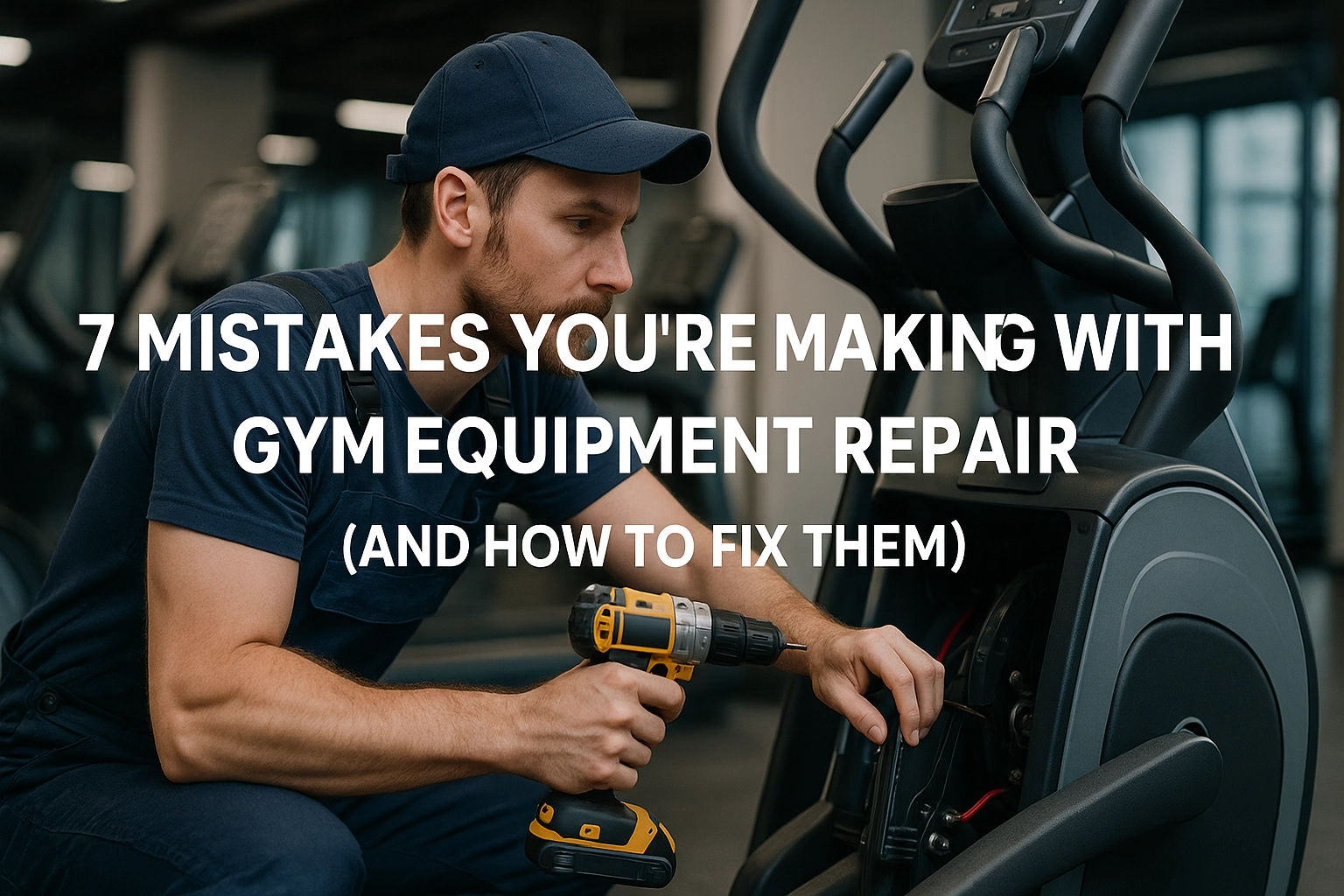
At HeartBeat Fitness Repair, we’ve spent countless hours diagnosing, fixing, and breathing new life into gym equipment, so we’ve truly seen it all. The good news? Most equipment failures aren’t mysterious acts of fate: they’re preventable mistakes that cost you time, money, and frustration when they’re ignored.
Whether you’re a home gym enthusiast or managing a commercial facility, our team sees these seven pitfalls over and over—and we’ll show you how to avoid them so your equipment runs safer, smoother, and longer. Let’s dive into what’s going wrong and how to fix it.
Mistake #1: Ignoring Your Equipment’s Owner Manual
The Problem
We can’t count how many times customers have called us after attempting a “quick fix” that turned into an expensive disaster. The root cause? They skipped the manual and went straight to YouTube or guesswork.
Every piece of equipment has specific requirements: from the type of lubricant it needs to the exact torque specifications for bolts. Ignore these, and you’re not maintaining your equipment; you’re slowly destroying it.
The Fix
Before touching anything, locate your manual. Lost it? No problem: most manufacturers provide digital copies online. The manual isn’t just legal protection for the company; it’s your roadmap to proper maintenance.
Pay special attention to:
- Recommended cleaning products (some chemicals can damage plastic components)
- Lubrication schedules and specific lubricant types
- Electrical requirements and safety precautions
- Adjustment procedures for belts and tension
Think of the manual as your equipment’s DNA: it tells you exactly what it needs to thrive.
Mistake #2: Treating All Equipment the Same
The Problem
We’ve walked into gyms where every piece of equipment gets the same generic maintenance routine. Spray some WD-40, wipe it down, call it good. This one-size-fits-all approach is like feeding your goldfish the same food as your German Shepherd: it’s not going to end well.
Treadmills need different care than ellipticals. Free weights have different requirements than cable machines. Each type of equipment has unique stress points, wear patterns, and maintenance needs.
The Fix
Develop equipment-specific maintenance routines. Here’s a quick breakdown:
Treadmills: Focus on belt alignment, deck lubrication, and motor cooling
Ellipticals: Pay attention to pedal bearings, drive belts, and resistance mechanisms
Strength Equipment: Check cable tension, pin insertion points, and weight stack alignment
Bikes: Monitor resistance systems, pedal tightness, and console connections
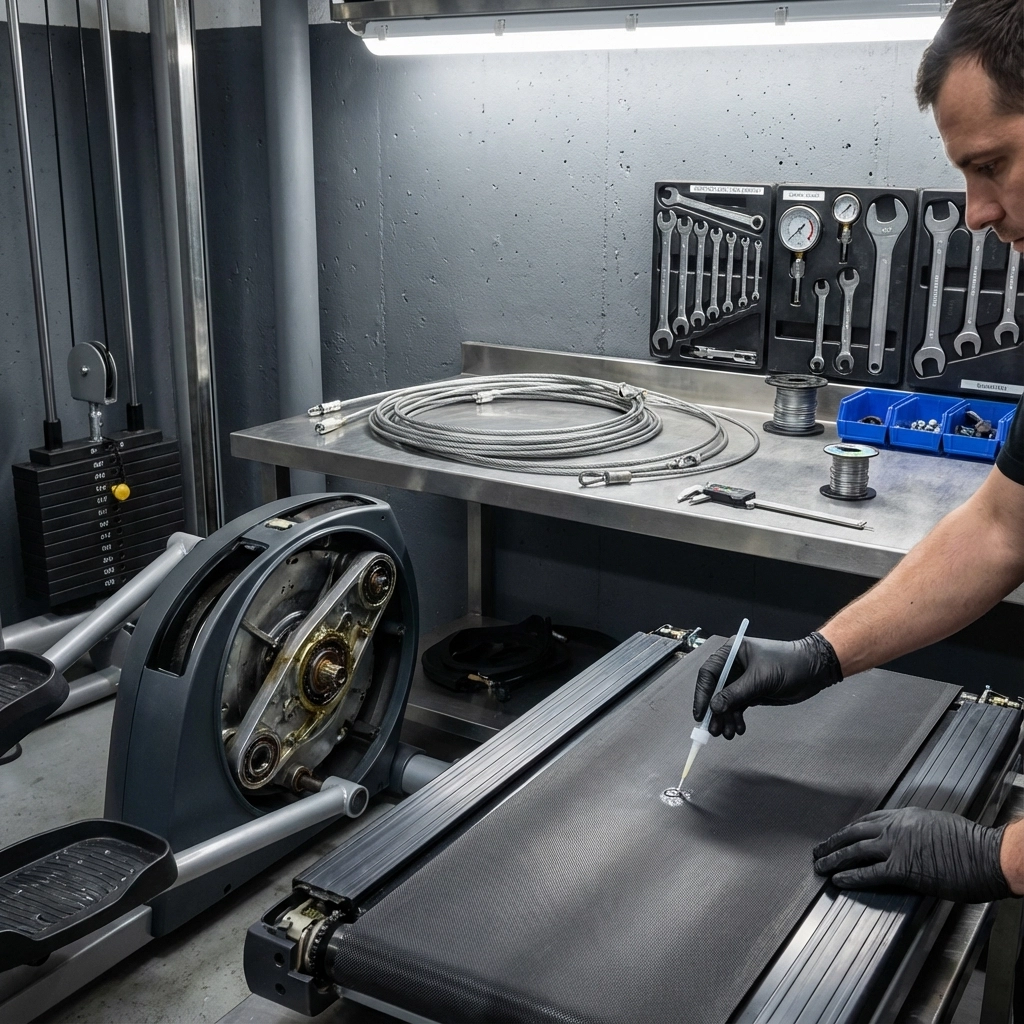
Create a maintenance log for each piece of equipment. Track what you’ve done and when: this data becomes invaluable for predicting future issues.
Mistake #3: Waiting Until Something Breaks
The Problem
Most people treat gym equipment like their car: ignore it until it stops working, then panic. By the time you notice that grinding sound or wobbly feeling, you’ve often moved from a simple adjustment to a major repair.
Prevention isn’t just cheaper than repair; it’s the difference between equipment that lasts 5 years versus equipment that lasts 15 years.
The Fix
We recommend a proactive maintenance schedule:
Weekly: Visual inspections, basic cleaning, listen for unusual sounds
Monthly: Deep cleaning, lubrication, bolt tightening, cable inspection
Quarterly: Professional inspection for commercial equipment, belt alignment checks
Annually: Motor servicing, electronic component testing, wear part replacement
Set reminders on your phone or calendar. Make maintenance as routine as your workout schedule.
Mistake #4: Using the Wrong Tools and Materials
The Problem
We’ve seen people use household cleaners that melt plastic components, automotive grease that gums up precision mechanisms, and power tools that strip threads beyond repair. Good intentions, wrong execution.
Using incorrect materials doesn’t just fail to solve the problem: it often creates bigger, more expensive problems.
The Fix
Invest in the right tools and materials:
Cleaning: Use pH-neutral cleaners designed for fitness equipment. Avoid bleach, ammonia, or abrasive chemicals.
Lubrication: Use only manufacturer-recommended lubricants. Treadmill deck oil isn’t the same as general machine oil.
Tools: Get proper hex keys, torque wrenches, and specialized tools for your equipment type.
Quality tools and materials might cost more upfront, but they’ll save you money and headaches in the long run.
Mistake #5: Ignoring Environmental Factors
The Problem
Your equipment doesn’t exist in a vacuum. Temperature, humidity, dust, and air circulation all impact performance and longevity. We’ve seen expensive equipment ruined by condensation, dust buildup, or extreme temperatures.
The Fix
Create an equipment-friendly environment:
- Control humidity: Keep it between 45-65% to prevent rust and electrical issues
- Maintain temperature: Extreme heat or cold stress electronic components and lubricants
- Ensure ventilation: Motors need airflow to stay cool and operate efficiently
- Manage dust: Regular air filter changes and equipment covers when not in use

Your equipment room should feel comfortable for humans: if you’re sweating or shivering, your equipment is stressed too.
Mistake #6: Attempting Complex Repairs Without Expertise
The Problem
YouTube can teach you a lot, but it can’t replace years of experience with electrical systems, hydraulics, or precision mechanics. We regularly get calls from people who’ve made expensive mistakes trying to save money on professional repairs.
There’s a difference between maintenance and repair. Maintenance keeps things working; repair fixes things that are broken. Know the difference, and know your limits.
The Fix
Learn to recognize when to call a professional:
- Electrical issues: Flickering displays, motor problems, or power inconsistencies
- Structural problems: Frame cracks, weld failures, or bearing replacements
- Complex adjustments: Belt tracking on commercial treadmills, hydraulic system repairs
- Warranty work: Don’t void your warranty with DIY attempts
A good repair technician pays for themselves by preventing bigger problems and maintaining safety standards. At HeartBeat Fitness Repair, we handle these issues every day—safely, quickly, and professionally.
Mistake #7: Focusing Only on the Obvious Problems
The Problem
When your treadmill starts making noise, you focus on the belt. When your bike feels wobbly, you tighten the obvious bolts. But equipment problems rarely exist in isolation: they’re usually symptoms of deeper issues.
That noisy belt might indicate bearing wear, motor problems, or alignment issues. The wobbly bike might have a cracked frame you can’t see.
The Fix
Think systematically when diagnosing problems:
- Document symptoms: When does it happen? Under what conditions?
- Check related systems: A console problem might indicate electrical issues throughout the machine
- Look for wear patterns: Uneven wear often reveals alignment or calibration problems
- Test under different conditions: Problems that only appear under load indicate different issues than constant problems
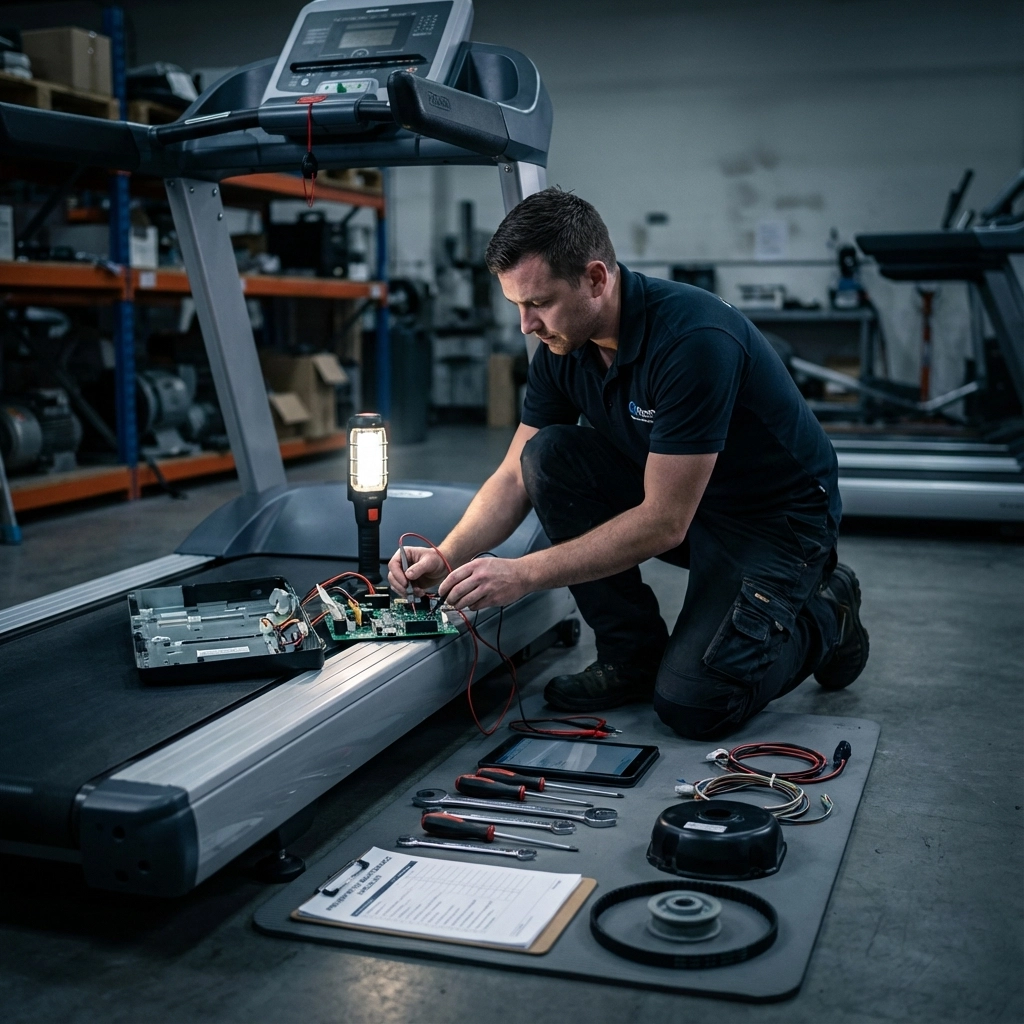
Keep a maintenance log that tracks not just what you fixed, but what symptoms led to the discovery. Patterns often reveal root causes.
The Big Picture: Your Equipment Investment Strategy
Here’s the truth that most people don’t want to hear: proper equipment maintenance requires time, attention, and some upfront investment. But consider the alternative: replacing a $3,000 treadmill every few years instead of maintaining one for 15+ years.
At HeartBeat Fitness Repair, we’ve seen equipment that’s decades old still running strong because owners treated maintenance as an investment, not an expense. We’ve also seen nearly-new equipment destroyed by neglect and good intentions gone wrong.
Your Next Steps
Start with an honest assessment of your current maintenance practices. Which of these seven mistakes are you making? Don’t try to fix everything at once: pick the biggest problem area and focus there first.
Remember, your equipment wants to work properly. Give it the attention it deserves, and it’ll reward you with years of reliable performance. Neglect it or treat it carelessly, and it’ll find creative ways to remind you that shortcuts have consequences.
Whether you’re maintaining a single home treadmill or managing a commercial facility, these principles remain the same. Respect your equipment, understand its needs, and know when to seek professional help.
Need a hand? Contact HeartBeat Fitness Repair for expert gym equipment repair, preventive maintenance plans, and fast, reliable service. Visit theequipmentfixer.com to schedule service or request a quote—we’re here to keep your equipment running its best.
Your future self: and your bank account( will thank you for making these changes today.)
 Heartbeat Fitness Repair
Leave a comment